
The Batmen of NTU
Under the cover of darkness, some heroes work tirelessly to rescue fallen bats. Find out what drives them to take up their torchlights — and the dangers these bats need saving from.

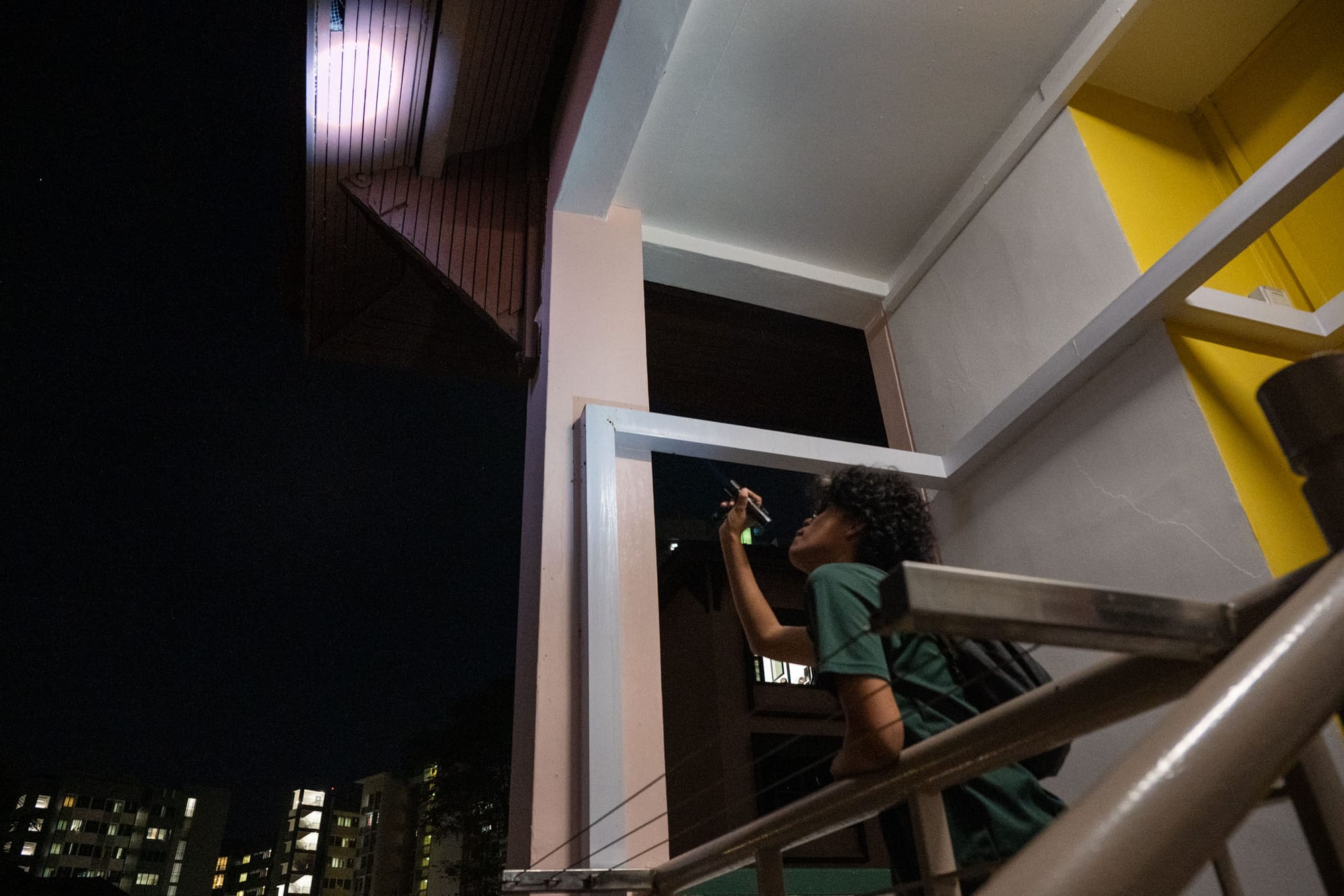
SINGAPORE — “When my friends ask me where I'm going so late at night, I just say I'm Batman and walk out,” said 22-year-old Raiyyan Abdurrahman, a volunteer with Nanyang Technological University Grounded Bat Surveys (NTUGBS).
Since their establishment in November 2024, NTUGBS has responded to over 240 cases of bat groundings on campus, a phenomenon where bats are stranded on the floor and unable to take off by themselves.
Volunteers respond to reports of grounded bats via the NTU Bat Response Hotline Telegram chat, to increase the chances of survival for these stranded bats.
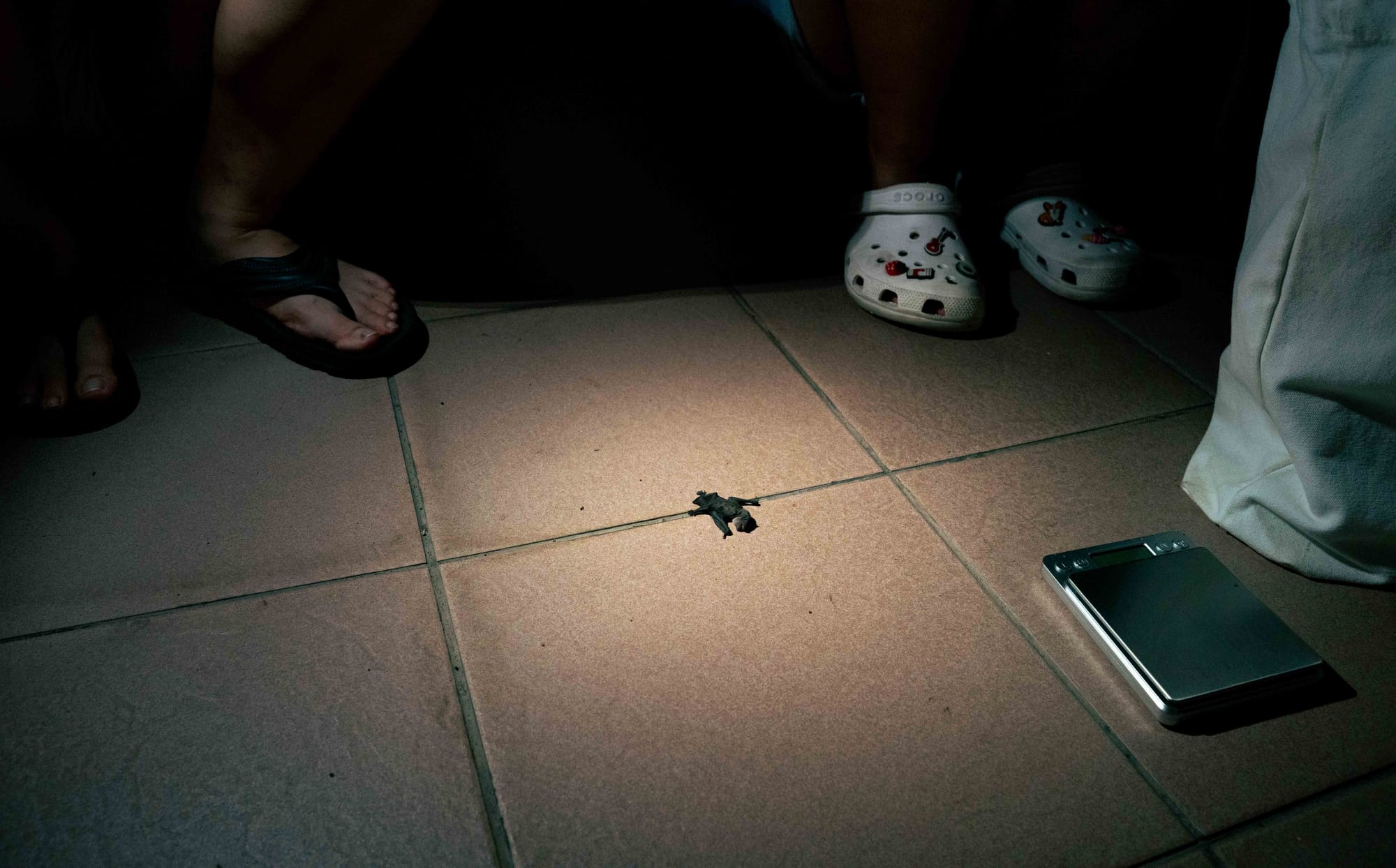
After locating a grounded bat, volunteers transfer it into a clear container and conduct a physical assessment of the bat. Bats assessed to be healthy will be released. Otherwise, they are handed over to the National Parks Board (NParks).
For Raiyyan, who is a first-year environmental engineering student, reporting a bat grounding case one evening changed his campus life.
As Raiyyan was making his way back to Hall 6 after an exam one evening, he was attracted to a commotion around a grounded baby bat and contacted the hotline immediately. After assessing it, the volunteer who responded to his call then put the bat gingerly on a table in hopes that the mother bat would claim its child.
An hour later, Raiyyan witnessed the successful reunification.
Raiyyan’s experience was one of only two recorded instances of successful bat reunification in NTU to date. VIDEO: Raiyyan Abdurrahman
“I actually got to see the mom arrive, pick up the baby and then fly off. It was a crazy moment for me, seeing our efforts to take care of these animals actually come to fruition.”
“I went back to my room and was low-key running circles, like this was the coolest thing I had ever seen, and that motivated me to end up joining the Grounded Bat Surveys,” he said.
When bats lose their bearings
According to NTUGBS, bat groundings are caused by a variety of factors, including erratic weather conditions, noise and light pollution, and urbanisation.
Of the five species of urban bats found on the NTU campus, three have been recorded as grounded: the pouched tomb bat, the lesser yellow house bat, and the Javan pipistrelle, which accounts for most of these cases.
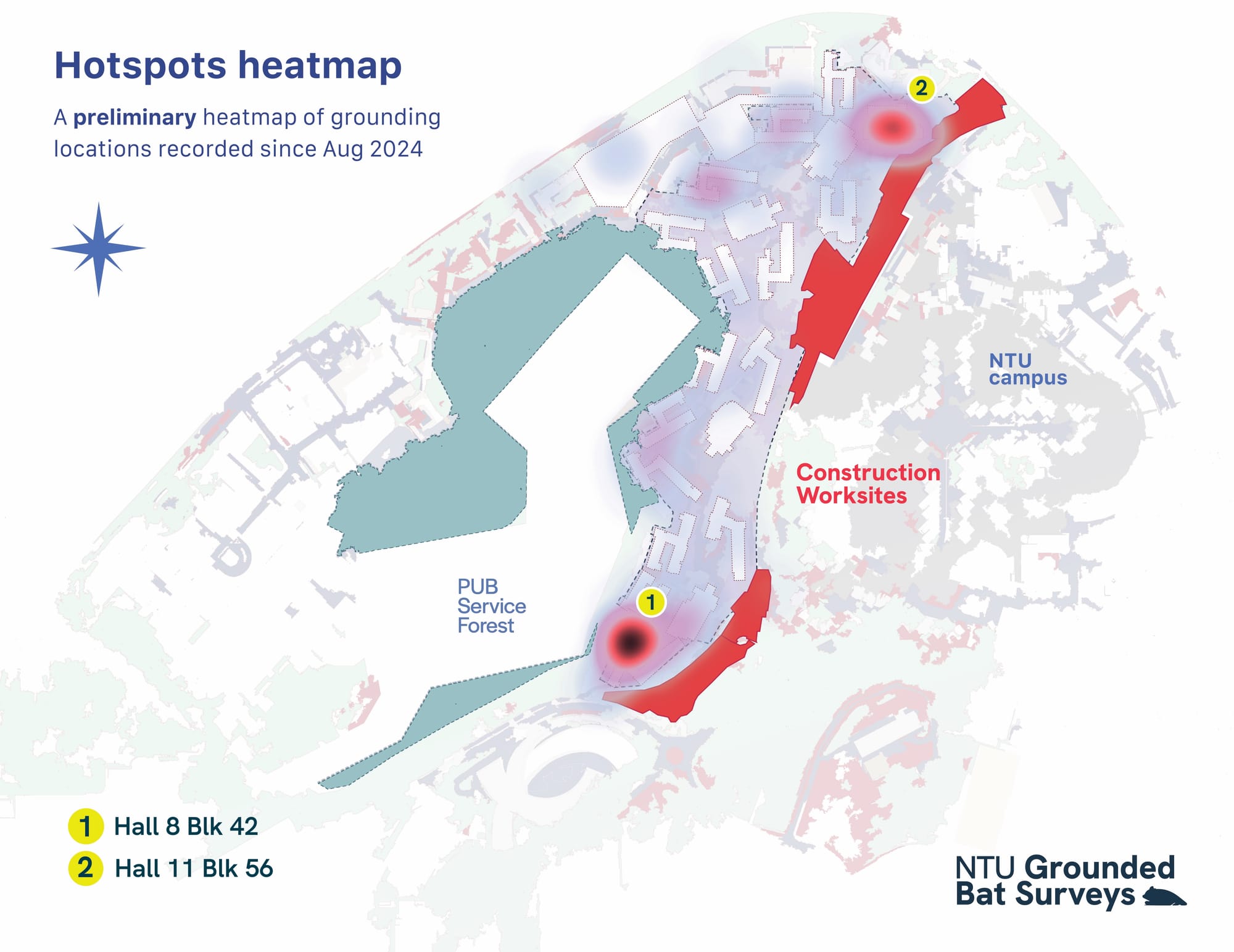
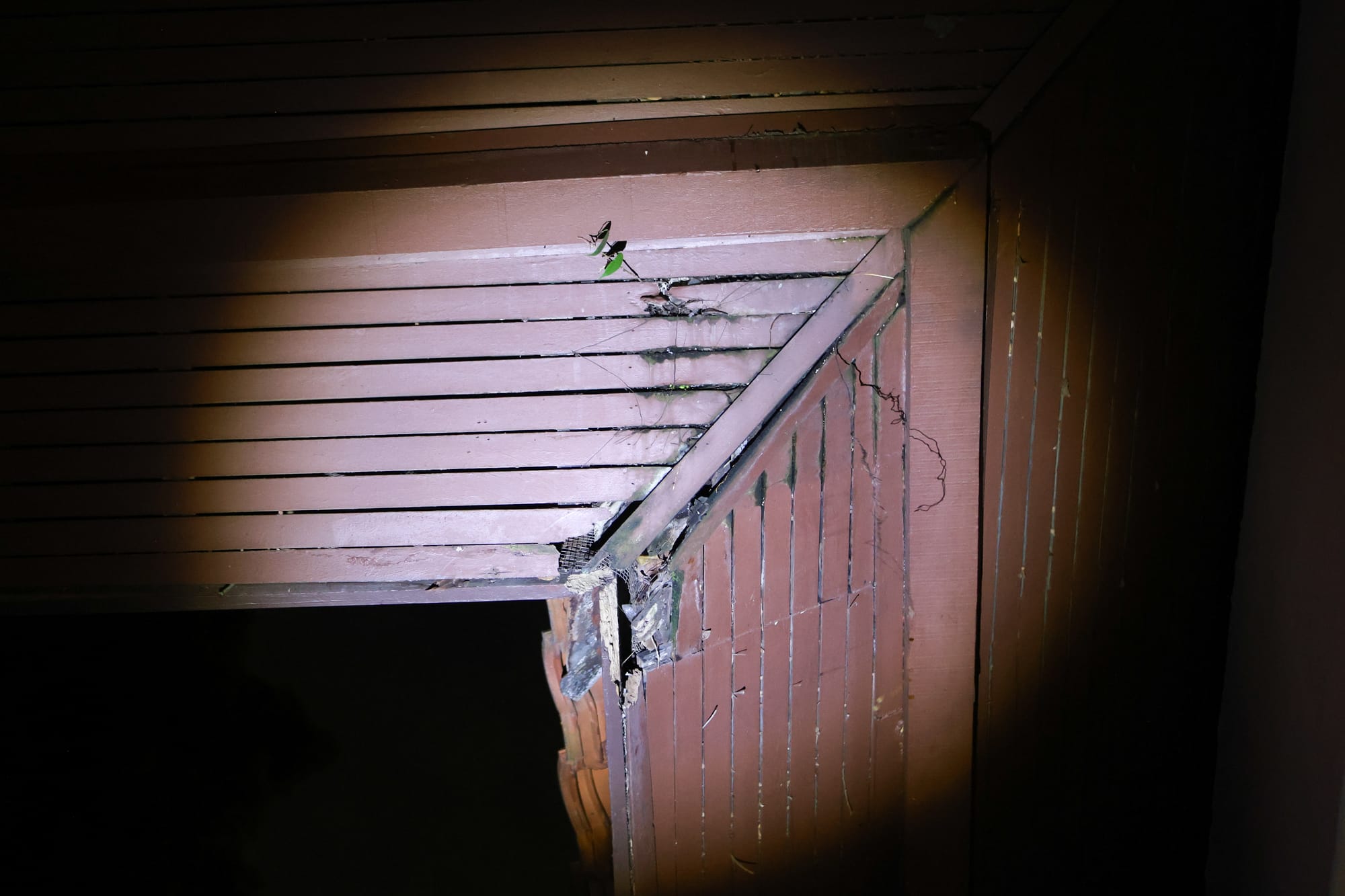
These mammals live within the roof spaces of older halls, congregating in their nests, which are known as roosts. The highest roost concentrations have been observed in Halls 8, 9, 10, and 11, with notable hotspots in Hall 8’s block 42 and Hall 11’s block 56.
NTUGBS co-founder Emma Chao, 20, said that the higher rate of groundings among Javan pipistrelles may be linked to their foraging behaviour.
The second-year environmental and earth systems science undergraduate said these bats tend to hunt close to building corridors since they are smaller and more agile.
Some even enter these corridors, but they become disoriented and end up grounded if they fail to find their way out.
“Pipistrelles do take advantage of street lamps sometimes to hunt, and they hunt around them. So if lights are on in our halls, it's possible that also attracts them,” said Emma.
The real dirt on bat excrement
Densely packed roosts of 30 to 50 bats can cause structural strain to roof structures over time. The buildup of acidic bat excrement also speeds up deterioration, adding to damage caused by rain and weather exposure.
Hall residents have expressed concerns over the bat sightings.
“I’m scared of rabies. If they attack me, then I don’t know what to do,” said Hall 6 resident Rachel Lam, 21, a first-year maritime studies student.
However, Emma says that there is little to no risk of being attacked by bats, as long as one does not attempt to handle or provoke them.
“Bats are incredibly precise navigators, and they do not approach humans,” said Emma.
According to NParks, Singapore has been rabies-free since 1953.
Meanwhile, fellow Hall 6 resident Benedict Koh, 25, a fourth-year linguistics and multilingual studies student, is also worried about the hall’s cleanliness, citing how its hall walkways are constantly covered by the excrement of bats.
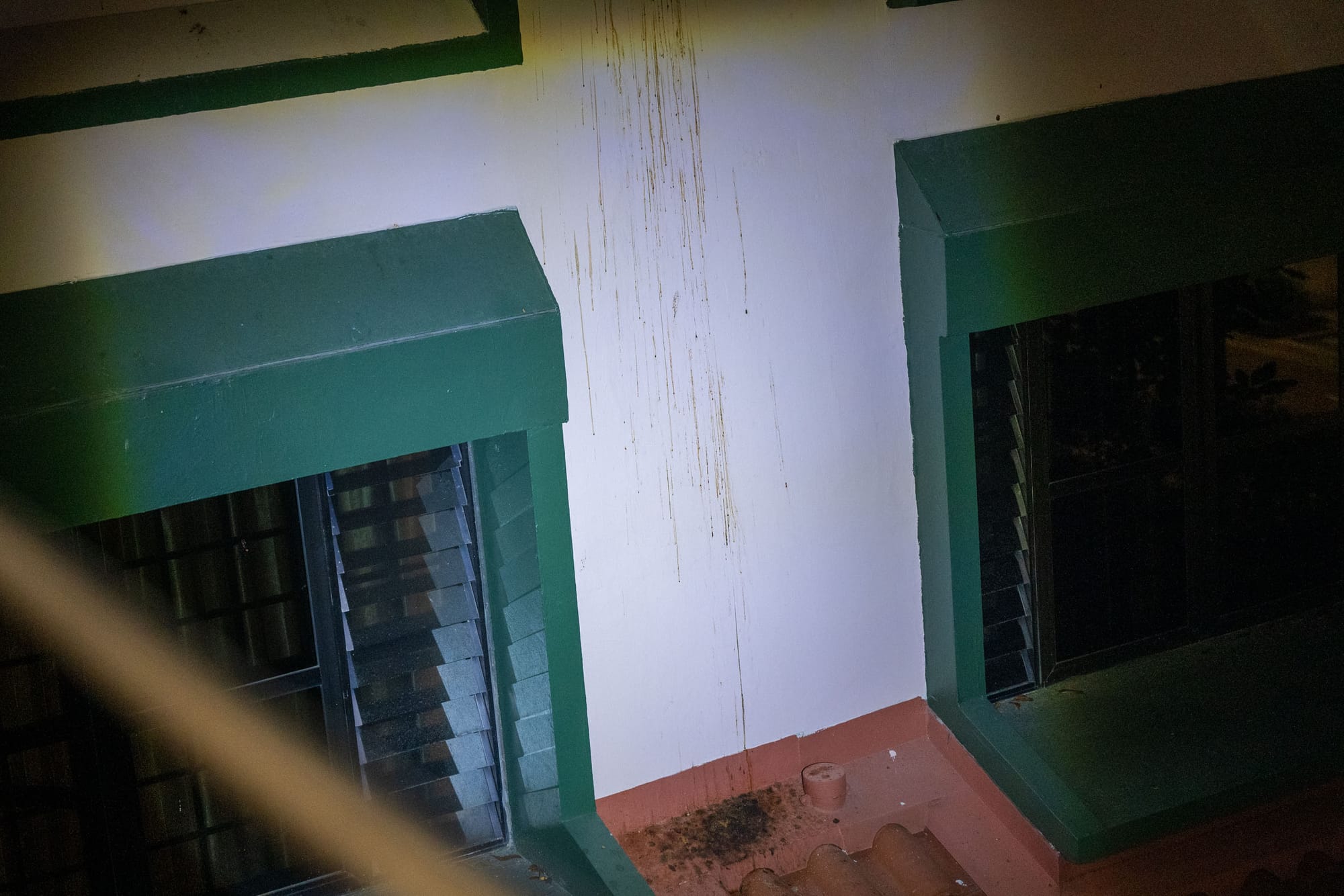
Ms Cyrena Lin, wildlife management and outreach director at NParks, said bat excrement, or guano, is not poisonous. However, fungus spores can grow on guano which causes a type of lung infection, histoplasmosis, if inhaled.
Still, Dr Matae Ahn, an assistant professor at the Lee Kong Chian School of Medicine, noted that histoplasmosis is rare in Singapore and are usually imported cases if any.
Dr Ahn’s work in bat immunology and inflammation has helped in positioning bats as models for discovering new approaches to combat human diseases.
Where passion takes flight
Apart from responding to bat groundings, NTUGBS also collects data on the type and number of bats in each roost and patrols halls for bat groundings during early mornings and late nights.
Volunteer Charmian Luo, 21, a second-year environmental sciences student, got to know about NTUGBS at the start of her first year after joining a nature walk. From there, she was made aware of the different student biodiversity monitoring efforts on campus.
She eventually joined the survey group to help with the effort.
While most are snug in bed at 6am, Charmian finds that going on morning surveys “adds character” to her life in university. It also helps that there is a chance she can possibly see bats as well as other interesting wildlife.
Last week, she spotted a pair of sunbirds — a sight she would have missed if she had not gone out to “touch grass”.
Charmian brings along basic tools during her surveys, including a ruler, a plastic box, chopsticks, and gloves.
Other volunteers even bring weighing scales to infer the bat’s age, allowing them to classify the animal as young, a “teenager” which is called a sub-adult, or adult.
This also helps them understand the distribution of grounded bats, which lets them speculate on the reasons for said grounding.
If a bat is found, chopsticks are used to coax it into plastic containers, as responsive bats naturally cling to the sticks. Next, they head to higher ground so it can take flight from a height — a process that could take up to two hours.
If it fails, they contact NParks to take over the job.
Bat to the basics
The team continues to coordinate closely with NParks, including refining bat release procedures across bat species and maturity.
Although guidelines generally recommend putting the bat on a tree in most places in Singapore, Emma pointed out that such a procedure does not take every situation into account.
“Some bats cannot fly off from a tree,” she said.
For now, the NTU Bat Response Hotline focuses its efforts on releasing recovered bats back into the NTU population. However, Emma says that existing bat response procedures, on campus and across Singapore, may need to be reviewed if overcrowding in roosts is found to be linked to groundings. She cited relocation to forests outside NTU as a possible future alternative.
In the meantime, Raiyyan will continue his 30-minute Thursday night hikes from Hall 11 to Hall 6, long after the campus buses have stopped running.
Through his work with NTUGBS, Raiyyan hopes to be the voice for the bats.
“Someone I knew saw me carrying a bat around and was like, ‘Oh, isn’t it slimy?’ But I’m like, ‘It’s a bat. It’s just like a human right, it’s skin and fur’.”
You can sign up as a volunteer with NTUGBS here.