Next stop: Pulau NTU
Former civil engineering students Mr Chan Teck Seng and Mr Lee Jin Kiat return to build the new MRT stations as part of the upcoming Jurong Regional Line in 2029.
SINGAPORE — Before dawn, Mr Chan Teck Seng plugged in his earphones and set off on a 15-minute walk to Yishun MRT Station, beginning his daily commute across the island. He would finally disembark at Pioneer after journeying through 15 stations.
Instantly swallowed by the morning crowd, Mr Chan jostled his way to the bus stop where he joined a line so packed it could fill four buses. Students squeezed in like sardines, all waiting for the final leg of their commute on Bus 179.
And by the time he arrives at NTU, Mr Chan has already gone through one episode of a Korean drama.
For four years of his undergraduate studies as a civil engineering student at NTU, Mr Chan’s daily 24-kilometre commute to school took a whopping 1.5 hours – a grind familiar to countless students who live far from campus. However, this long and arduous routine is about to change.
A decade later, 35-year-old Mr Chan is among those helping to build the system that will ferry future generations of NTU students from their doorsteps to schools.
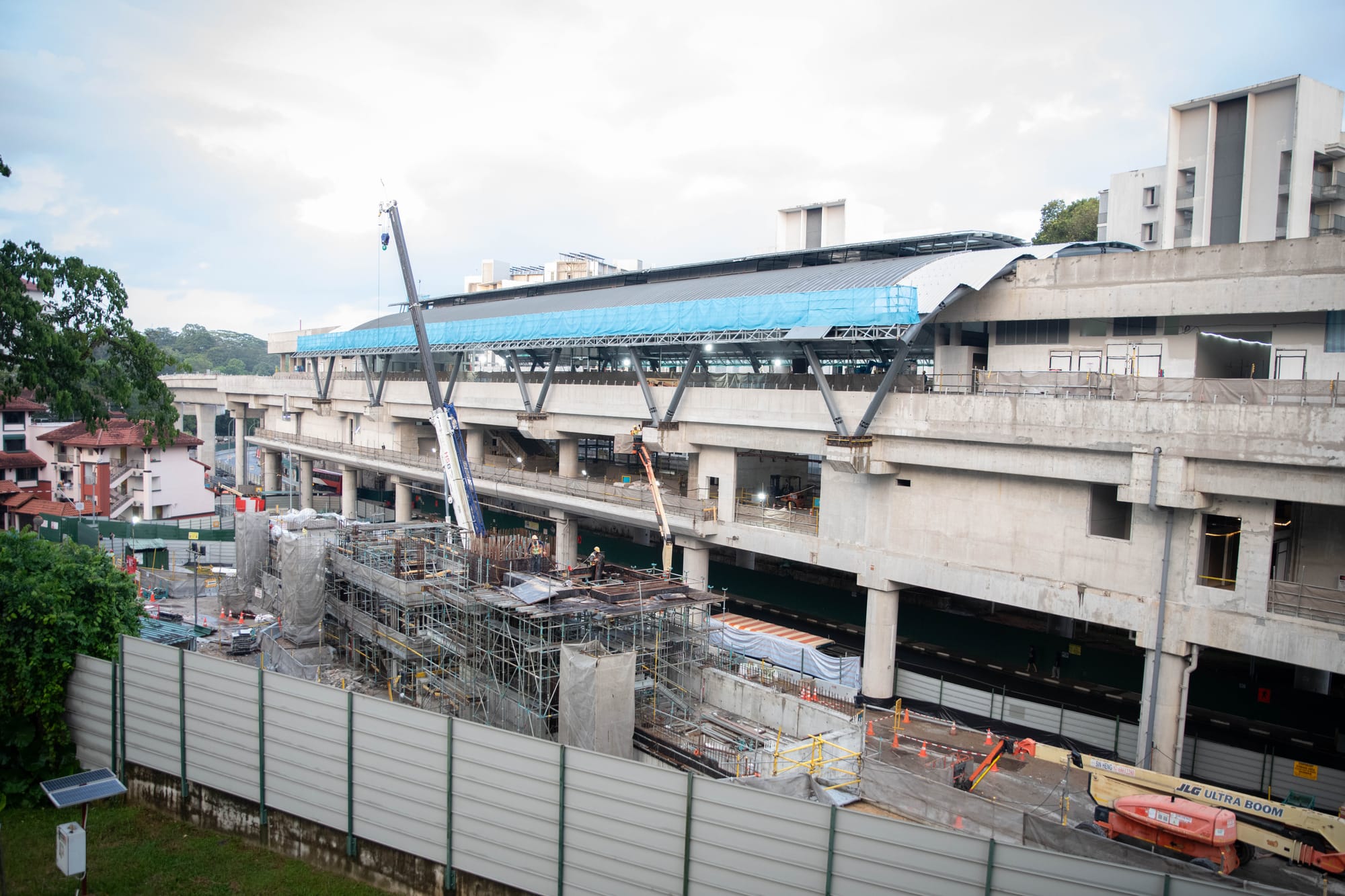
In 2029, NTU will be the first school in Singapore to have three train stations – Nanyang Gateway, Nanyang Crescent and Peng Kang Hill – serving its students. The 24km railway will place over 60,000 households in Jurong within a 10-minute walk from a train station.
A $148 million contract to build the stations and their associated viaducts was awarded to Hwa Seng Builder (HSB) in May 2022.
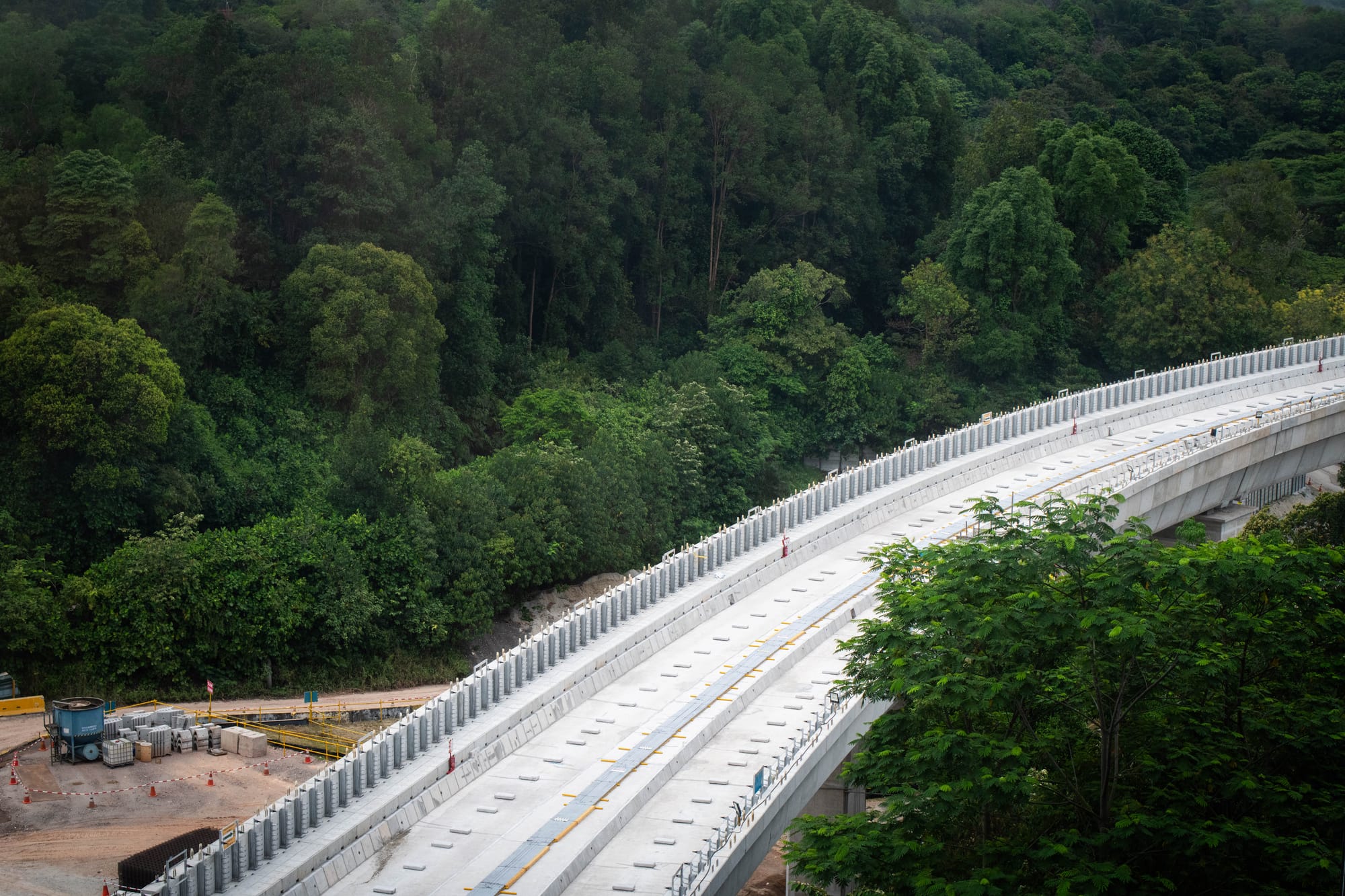
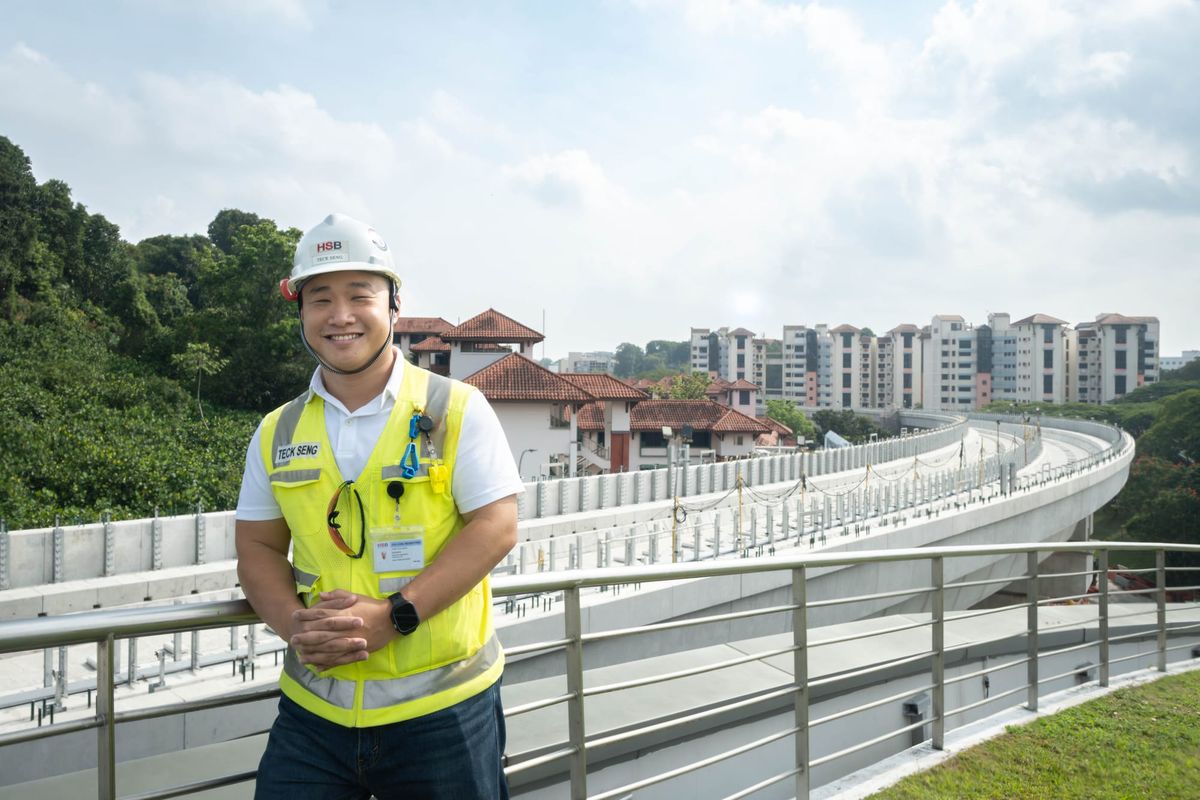
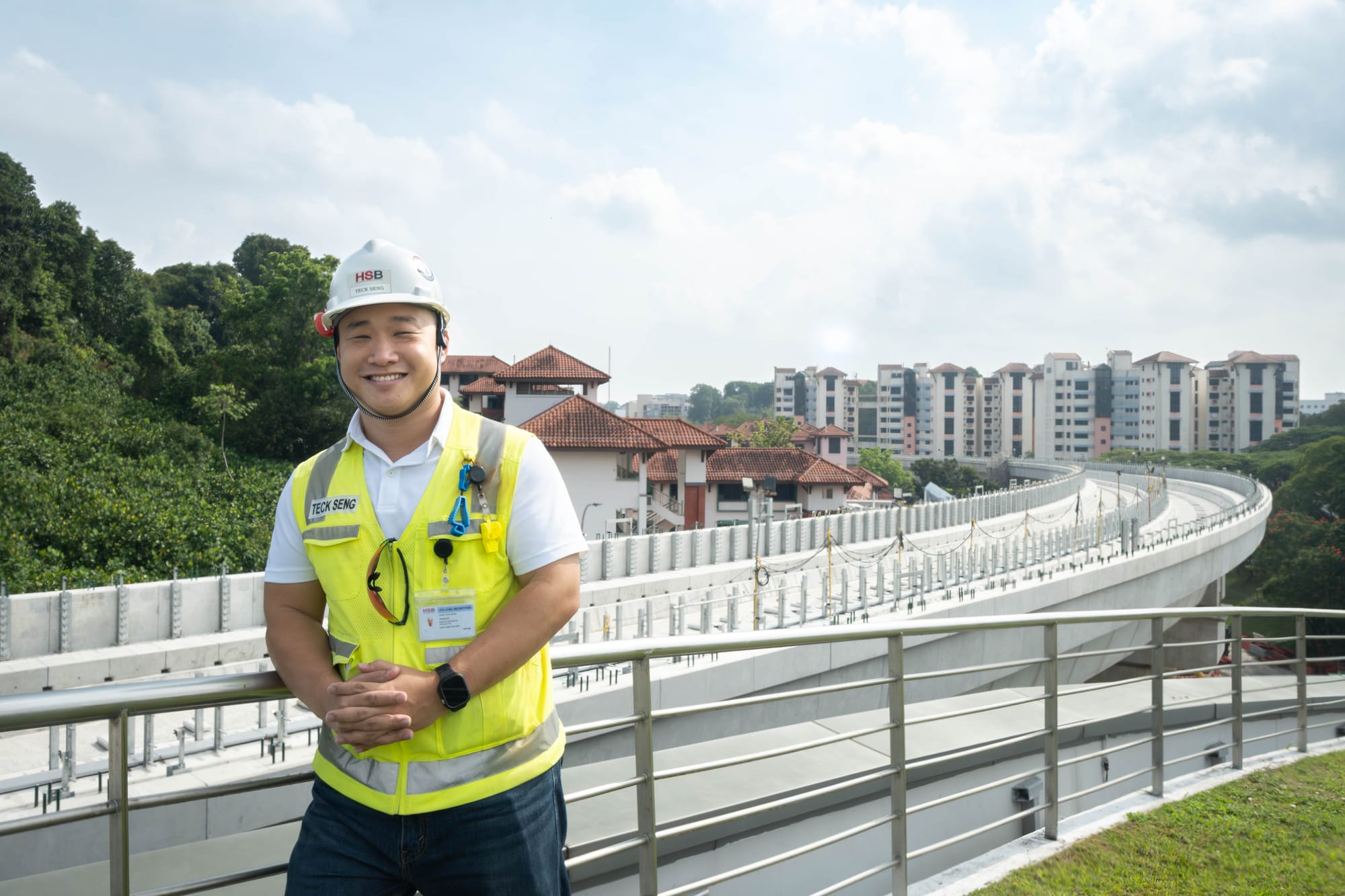
Mr Chan, a deputy project manager at HSB, oversees a range of tasks – from clearing forested areas for station works to designing viaducts – while ensuring the safety of more than 500 workers and tracking construction progress.
Even a decade after graduating, Mr Chan still carries lessons from his university days into his current workplace. One standout memory comes from Associate Professor Li Bing, who teaches structural engineering in the School of Civil and Environmental Engineering.
“My final year project mentor, Dr Li Bing, had a great impact on me ever since I was a Year 1 student. I still remember the way he taught using analogies,” said Mr Chan.
For example, Mr Chan remembers learning about structural load transfer through a family hierarchy analogy: weight moves down from the slabs to the beam and from the beam to the columns – making the mechanics of structures easier to grasp and remember.
“Loading is something we do every day, so I get to apply it in my work.”
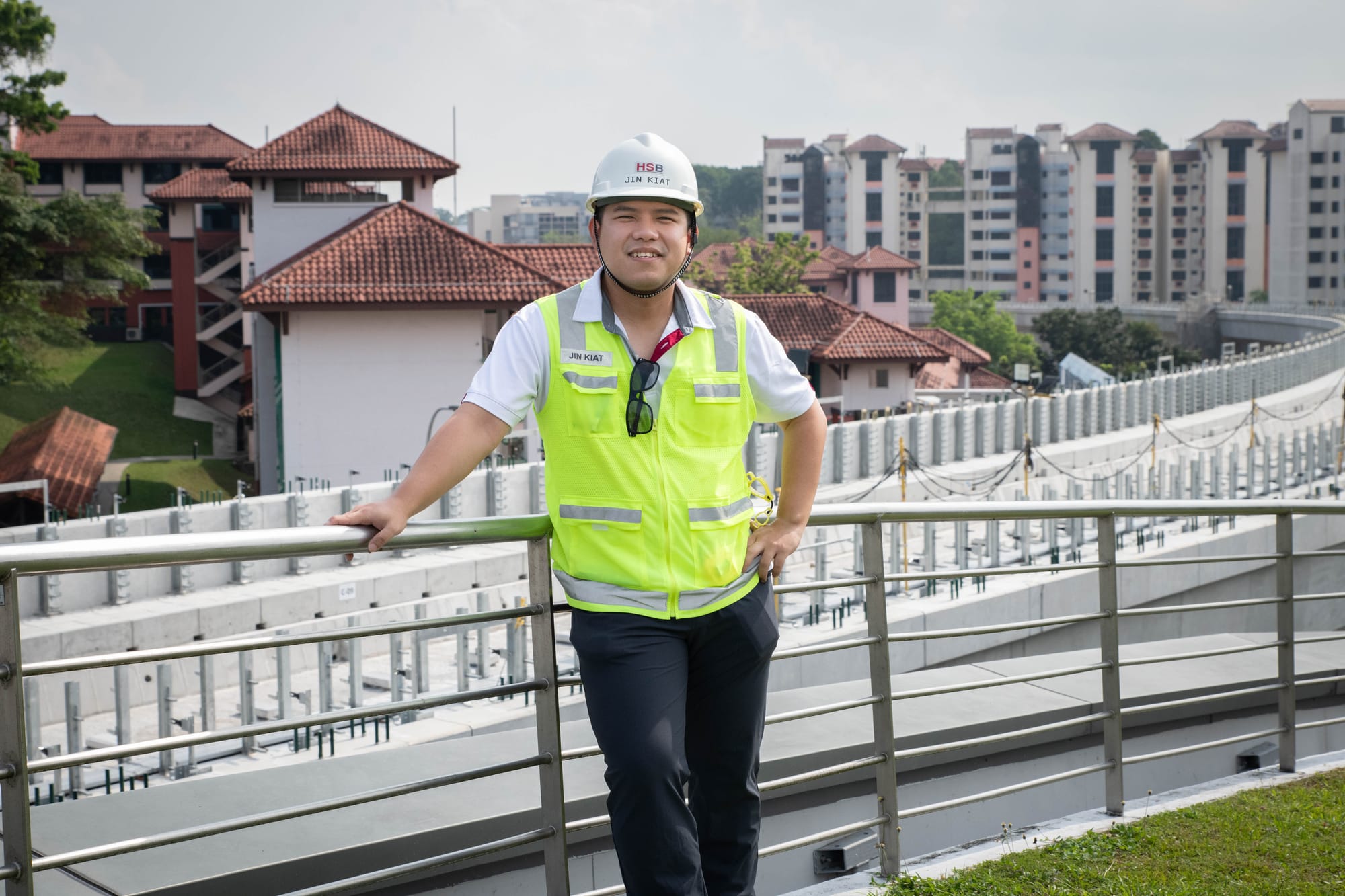
Fellow NTU alumnus and civil engineer at HSB, Mr Lee Jin Kiat, 32, recounts waiting more than 20 minutes for the bus home after his four-hour night study sessions at Lee Wee Nam Library.
“I hated waiting for the bus because it took ages to come, but for the MRT, there will usually be (regular) intervals. So, the new line will be especially helpful for students studying till late.”
Even with the long waits, Mr Lee cherishes the memories of escorting his then-girlfriend, now wife, home after countless study sessions in the School of Art, Design and Media’s library. The couple met in Hall 8’s orientation programme in 2016 and tied the knot last year.
Yet, amid the pride and nostalgia, there is another side to the story: the construction industry is relentlessly demanding.
“To work in this industry, you must be tough – the rain and shine, the stress, the worry. Most importantly, you must have the right mentorship. Because when something really happens, it’s the hand-in-hand partnership that makes things easier,” said Mr Chan.
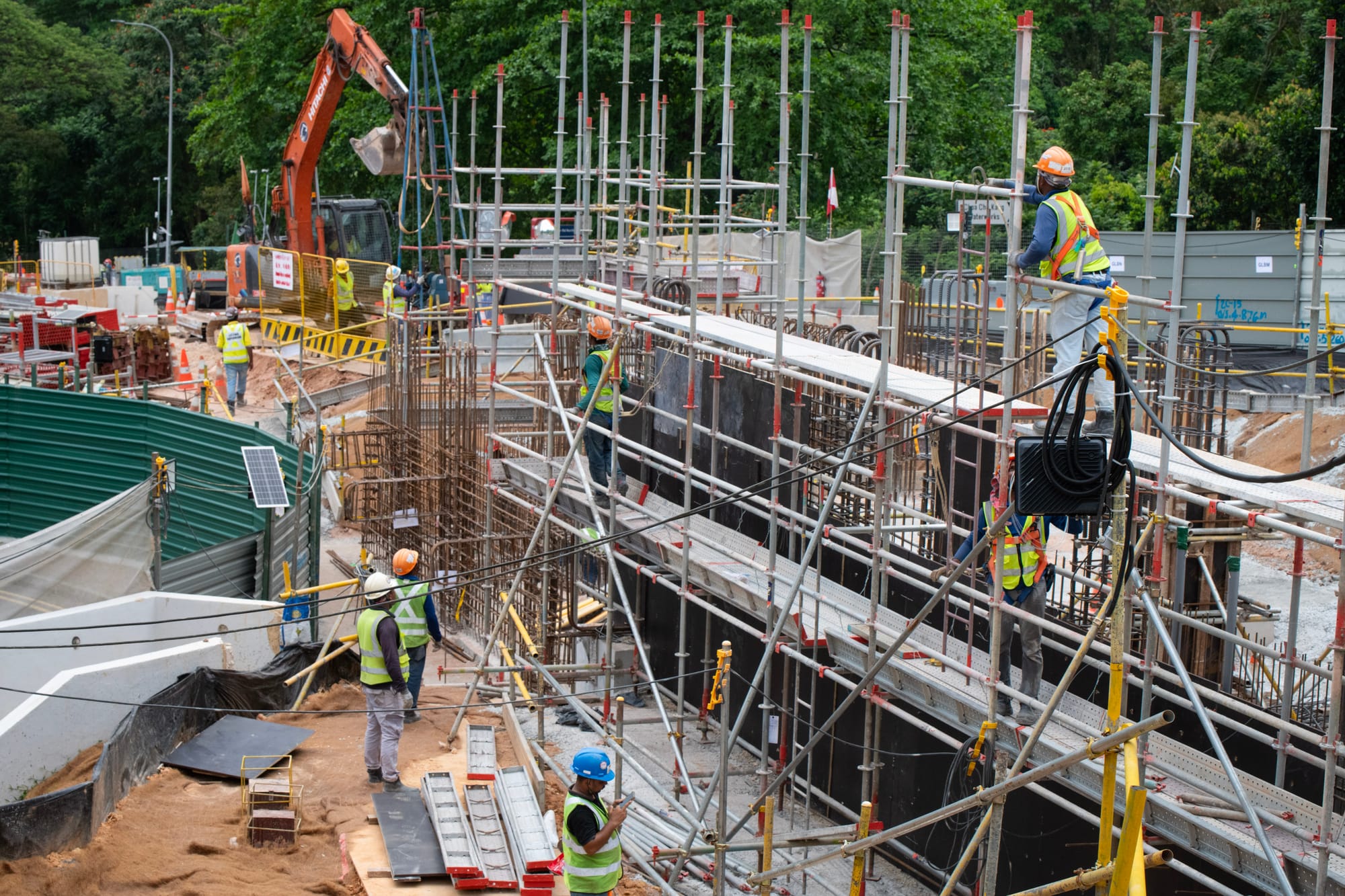
Mr Lee said: “Every task at work has its own difficulties. I remember having to divert water pipes as tall as me, but it’s very much about learning as we go… Our work days span six days a week, and sometimes even seven.”
Given these demands, Mr Lee said it is uncommon for civil engineering graduates to pursue jobs in this field. He knows fewer than five people from his batch who are still in civil engineering, while most of them entered the finance or consultancy industry.
Mr Lee also noted that it is his first time being in charge of major works, like pedestrian overhead bridge demolition and architectural works. As such, teamwork is paramount, especially given that this is HSB’s first massive construction project.
“I think teamwork is very important when it comes to such mega projects. Just learn as much as you can and don’t be afraid to fail.”
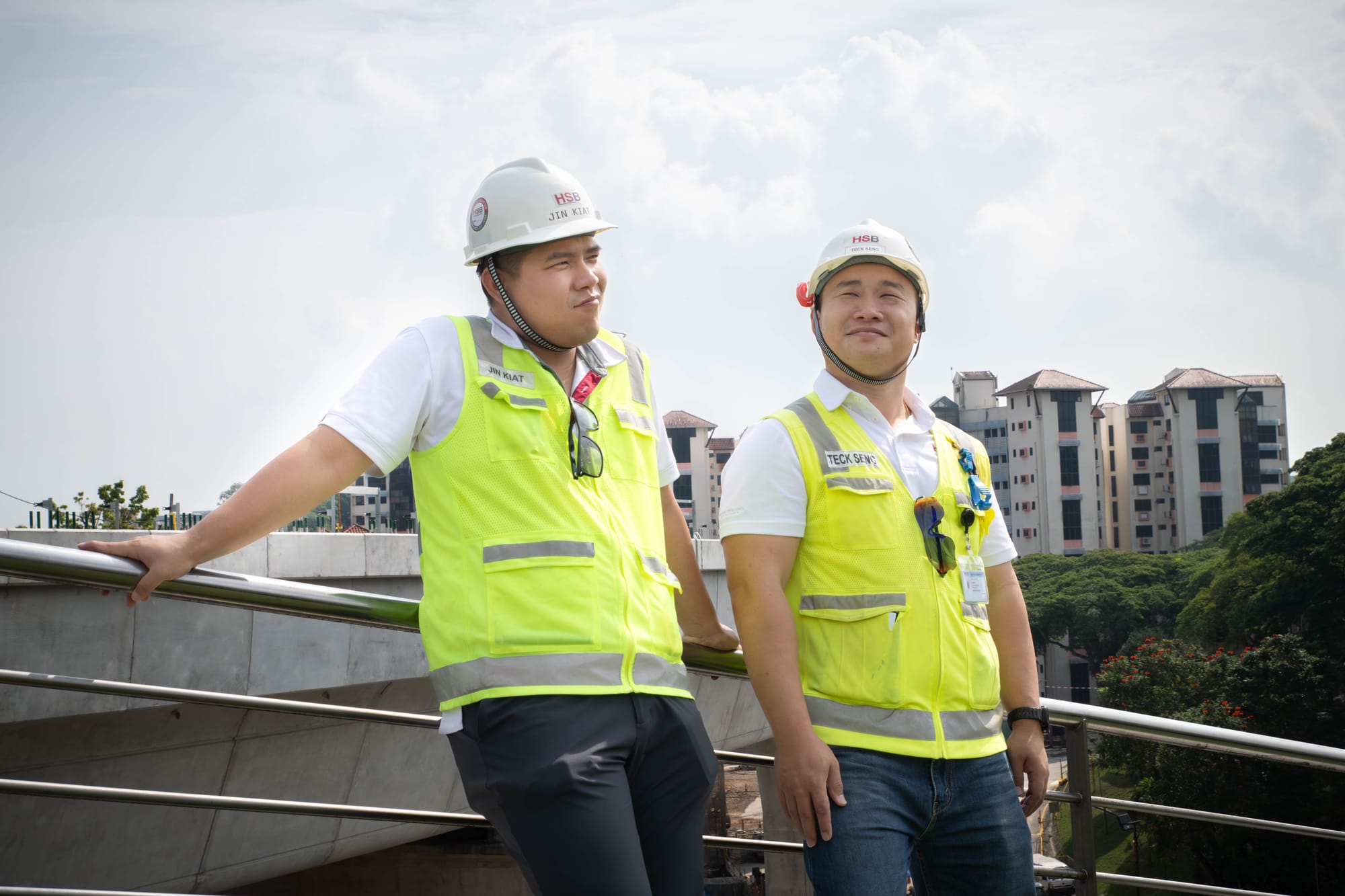
Returning to NTU as alumni, now supporting the development of key infrastructure within the campus, feels like a homecoming for Mr Chan and Mr Lee.
When the train starts operating, Mr Lee looks forward to bringing his wife for a ride. He also hopes to recount his experience building the JRL to his future kids.
“It’s very fulfilling because you hear parents say to their children, 'This is something I've worked on before.’ I can say that to my future kids as well.”
Mr Chan said: “On my first day back to NTU (for a site inspection) in 2023, I had mixed feelings. The last time I walked down North Spine was with my university friends. As I walked down that same path, the feeling was like: ‘Where are my friends?’ Now, it's working life, it's no longer university life.
“But I will take photos and send them to my group chat: ‘That one change, this one change, there is a new store here. Nonetheless, it's still homecoming.”