NTU leads nationwide African internship programme
NTU is leading a programme to send students from local universities to five African countries for internships.
SINGAPORE — University students in Singapore can now apply for internships in five African countries – Ghana, Côte d'Ivoire, South Africa, Guinea and Mauritius – under the new Africa Ready Talent (ART) Programme launched by the NTU Career Attachment Office (CAO) last month.
The programme, which is supported by Enterprise Singapore and the Ministry of Trade and Industry (MTI), provides internship opportunities in sectors such as hospitality, manufacturing and supply chain logistics.
Starting in December this year, students will have the chance to work at various firms, including Robust International, which owns a cashew processing plant in Côte d'Ivoire. There, interns will monitor the environment and the firm’s agricultural supply chain. Among the participating companies is also Tolaram Group, known for producing the popular instant noodle Indomie in Nigeria since 1988. According to a 2019 CNN report, Indomie accounted for nearly 80 per cent of the country’s instant noodle market.
Before the ART programme, Nanyang Business School (NBS) previously partnered with agribusiness group Wilmar International to provide internship opportunities in Uganda, through the school’s Academy for Career Excellence.
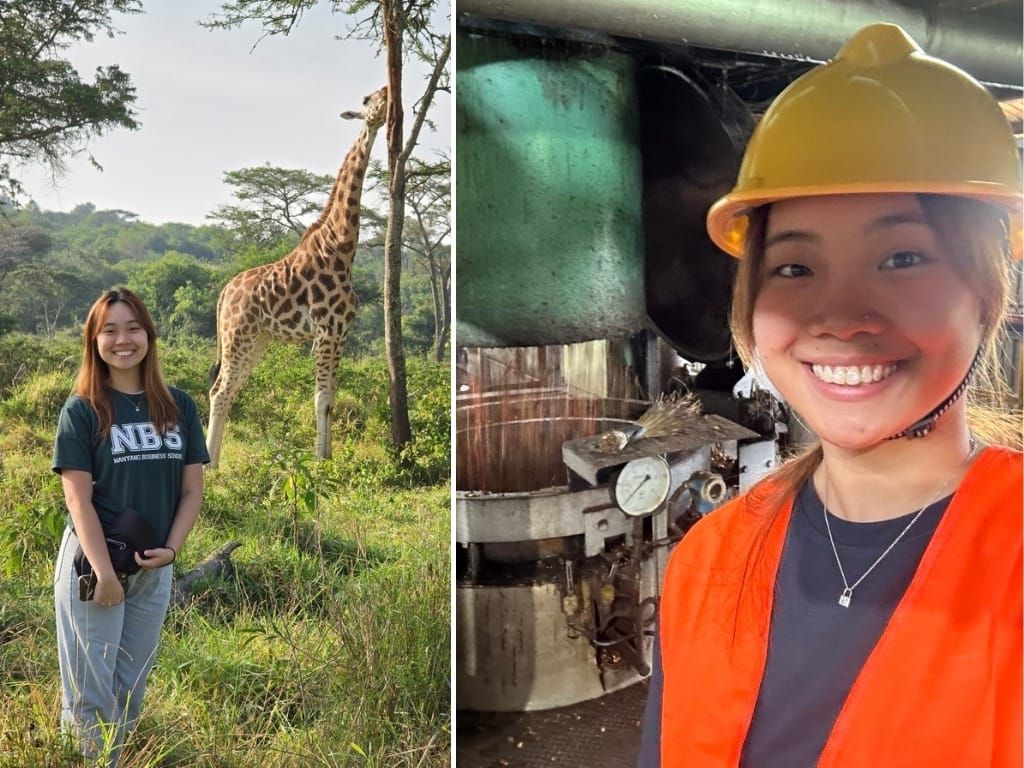
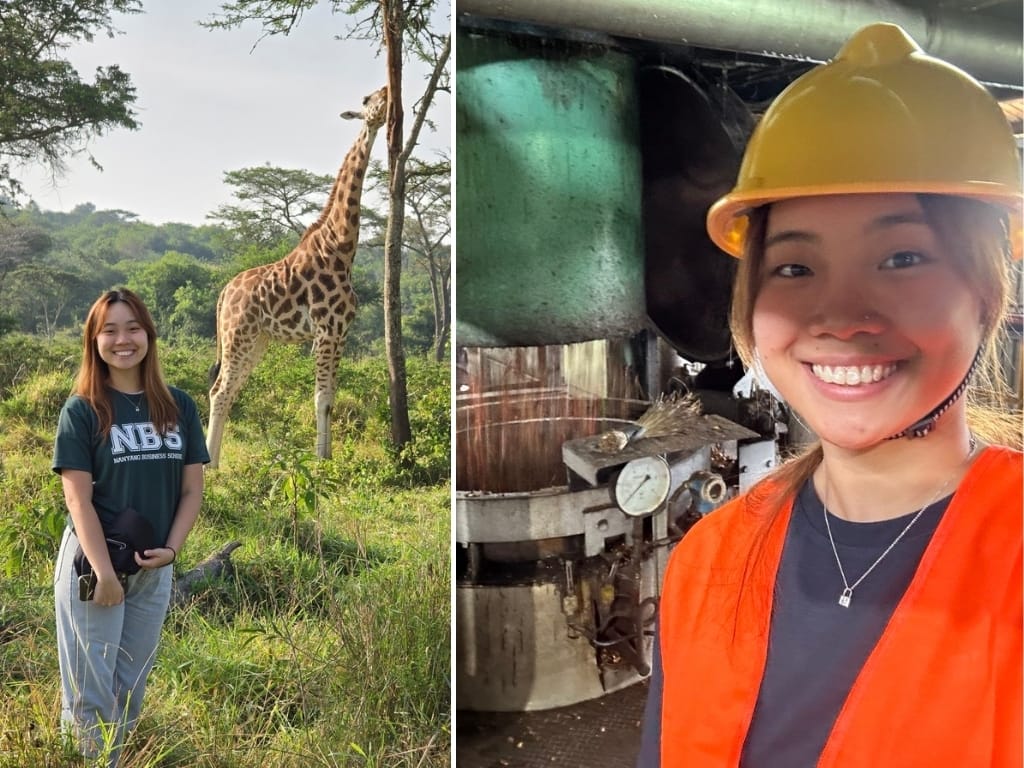
One such student is Sabrina Lim, a final-year student who travelled to Uganda back in 2024.
Her prior studies in hospitality at Temasek Polytechnic exposed her to people from diverse backgrounds, sparking a desire to explore new cultures firsthand. When an email from the NBS Academy for Career Excellence offering this internship landed in her inbox, she applied without hesitation.
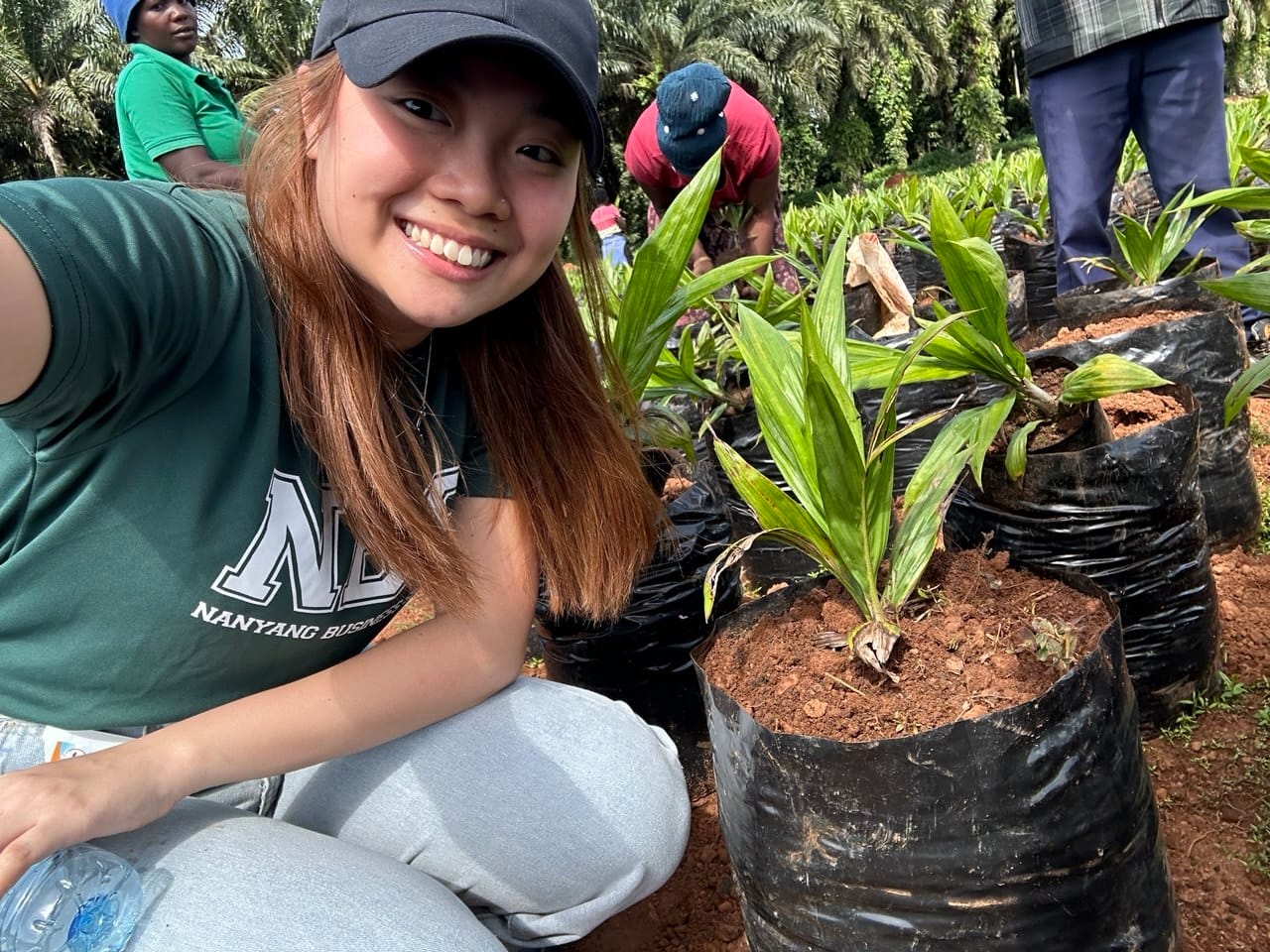
Sabrina spent 10 weeks working on a palm oil plantation assisting with tasks such as nursery operations, soil analysis and disease management before rotating to a palm oil refinery where she oversaw the production of palm oil products.
“The experience was really something one of a kind,” she said.
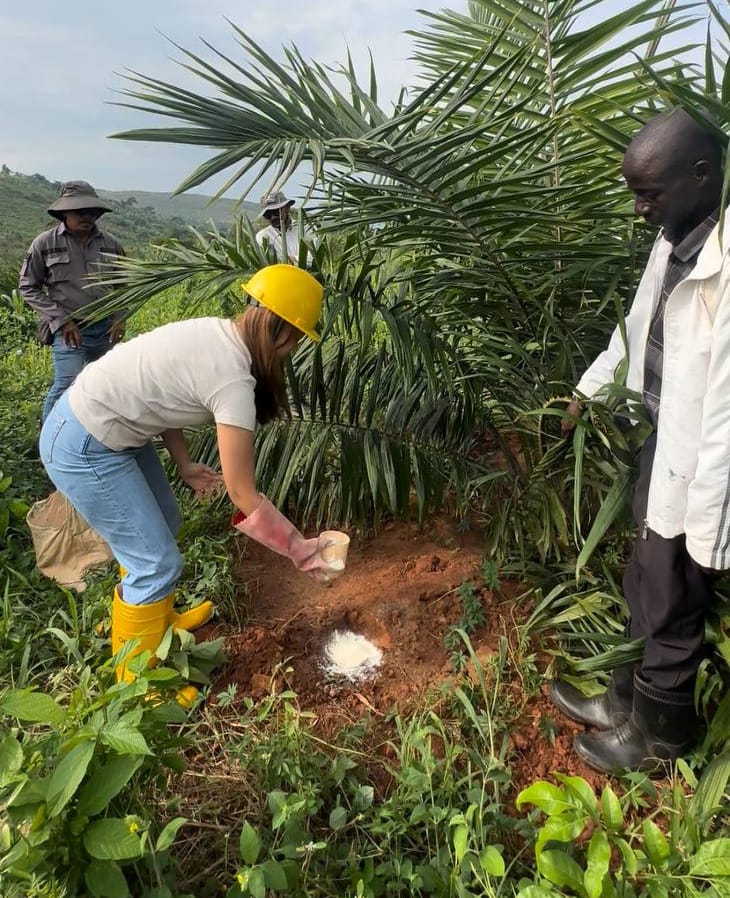
Her then-schoolmate Spencer Tng, who specialised in international trading, completed an internship stint with the same company during his second year. He saw this as a unique opportunity to gain practical experience in agricultural trading – a “niche profession” with limited hands-on opportunities in Singapore.
“Africa has significant long-term growth potential, and I was interested in understanding how Wilmar operates in a developing and dynamic market,” he said.
Spencer’s internship experience reinforced his interest in the agribusiness and commodity trading industry. He is now working full-time for Wilmar International as a commercial executive, supporting physical palm oil traders in their daily commercial activities, such as trade verification and cross border shipment planning. Over the past year, he has been stationed in various African countries, including Kenya and Rwanda, with an upcoming posting in South Africa later this year.
However, he recalls that his excitement about moving to Africa for the internship was initially dimmed by worries from his mother.
“Naturally, my family was concerned about the political stability and the standard of living,” Spencer said. “Africa is not a very common workplace for interns, so people around us couldn't give advice.”
Earlier this year, tensions peaked in Uganda again during its presidential election in January, which were marred by a nationwide internet blackout and fraud allegations by opposition leader, Bobi Wine, after longtime leader Yoweri Museveni swept the polls to claim his seventh successive victory. The disputed results ignited violent protests that left seven dead.
However, the on-the-ground reality proved to be far more manageable than expected.
Spencer is located in a rural plantation in Jinja, at least a two-hour drive from known protest areas in the main city district of Uganda where political activity is at its highest. As a result, his exposure to protests has been relatively low.
Sabrina recalled that Wilmar International organised a strict itinerary with clear daily protocols including a dedicated local chauffeur. This controlled environment kept safety concerns at bay and gave her family some much-needed peace of mind.
In addition, NTU partners with global intelligence risk firms like International SOS, to provide students with 24/7 localised security alerts and immediate medical evacuation capabilities. Accessible via a smartphone application, the platform ensures student safety is monitored in real time.
"With proper preparation, doing your research, speaking to seniors who have gone before and following company guidelines closely, there shouldn't be any issues,” Spencer said.
“You may go there expecting to learn (only about your role), but you will come back with a much broader perspective on people and yourself,” he said.
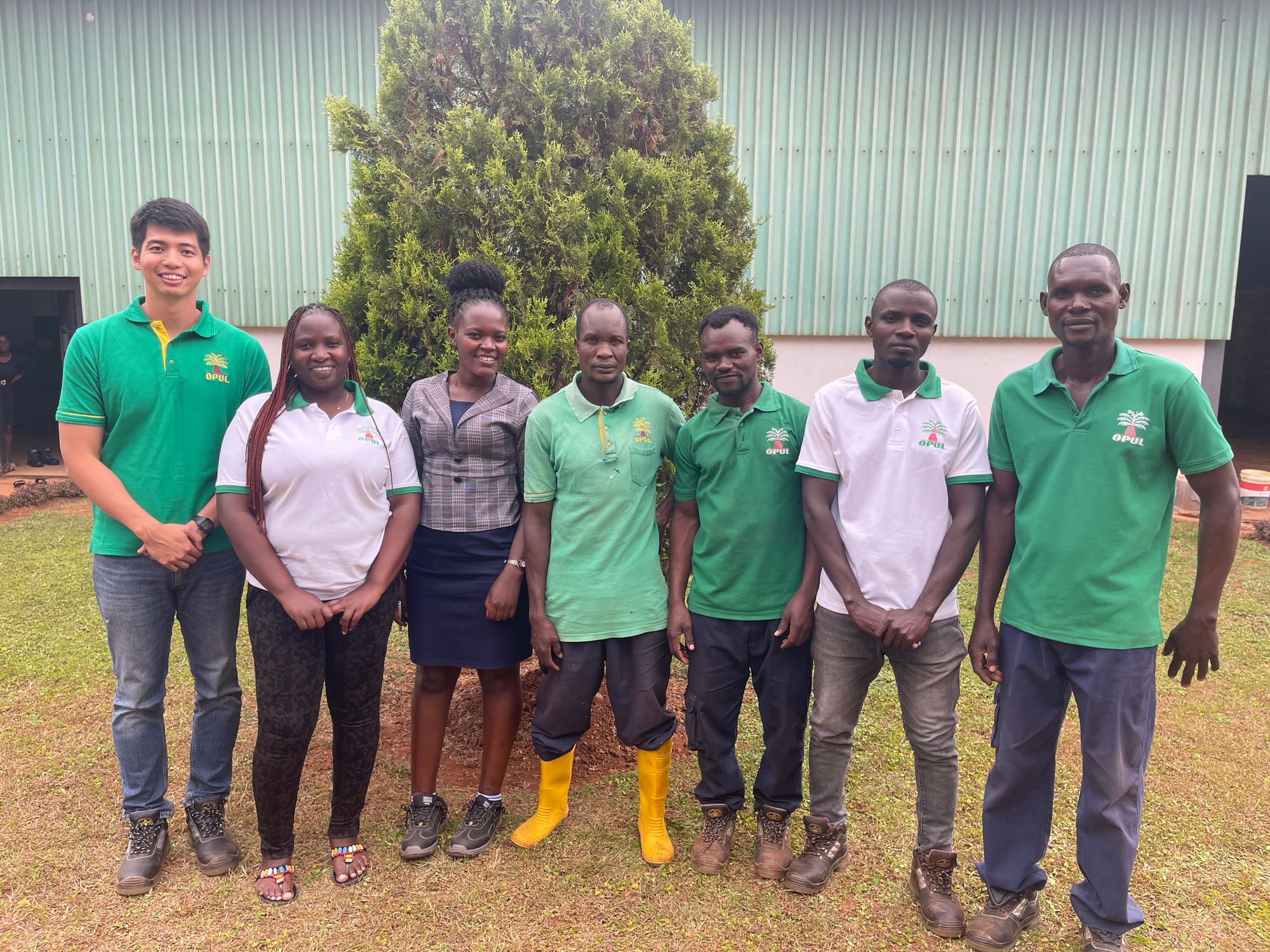
NTU Entrepreneurship Academy student Nicholas Masumbuko, 21, is from Burundi, a country in East Africa. He is currently pursuing a FlexiMasters in Technopreneurship and Innovation.
After reading Singapore’s founding prime minister Lee Kuan Yew’s autobiography, he became interested in the nation and how it managed to become a “major power” in a few short years. This prompted him to pursue a master’s degree here.
“I wanted to see how a country that wasn’t particularly rich in resources managed to develop itself so fast,” Nicholas said. “(This) is the main reason why I came.”
A question he often receives from his professors and peers is about the business and economic outlook of Africa.
“They ask me a lot about the business world and the opportunities (available), how these opportunities can be developed in the future and what's missing,” he shared. “The overarching conclusion that we often get back to is that Singapore, 30 years ago, was very similar to Africa.”
Nicholas hopes that students applying for the ART programme remain open-minded and develop a deep appreciation for the local culture, rather than viewing the internship through an “academic" or “business” lens.
“Africa is one of the biggest continents in the world. We have so many people and so many different cultures,” he said. “It's impossible to know all of them, but I really recommend students (to focus on) a few countries.”
While many still hold misunderstandings about the region, Nicholas is continuing to use his time abroad to shed light on the region.
“I really am grateful to be here in Singapore to change a bit of the mystique of Africa and clarify (people’s understanding) a little bit more,” he said.
A talk about the ART programme was held at Wee Cho Yaw Plaza on August 20. Among the attendees was Clairre Lau, a first-year student from the School of Social Sciences, who had already been researching Singapore-Africa trade relations.
In 2025, while working on a scholarship essay on what Singapore could look like in the future, she wrote to MTI with questions about Singapore’s trade ties with Africa. She received detailed responses from the Middle East and Africa division, and was encouraged to explore a summer internship with the ministry.
“Africa is a very up and coming (region). It’s going to have pretty large international prominence,” Clairre said.
The ART programme is in line with plans announced during Budget 2026 to build and diversify Singapore’s existing overseas enterprise networks with various regions including the Middle East, Africa and Latin America, according to CAO deputy director Desmond Woo.
Following the successful launch of another similar initiative — the India Ready Talent Programme — by NTU last year, the government re-appointed the university to lead the new nationwide programme, he said.
Students from other local universities, including the National University of Singapore, Singapore Management University, the Singapore University of Technology and Design and the Singapore University of Social Sciences, will be able to apply for this internship through NTU’s career office. The inaugural cohort is set to travel to Africa this December.
Applications for the ART programme are currently open. Interested students can join its Telegram channel here.