NTU revamps CSL to fix teething problems
The newly-introduced module faced significant backlash and doubts during its pilot run, and has since made various changes for its first full roll-out.
SINGAPORE — NTU has revamped its compulsory service-learning module following student feedback, expanding the range of communities that students can serve and giving them more time and flexibility to complete their service hours.
NTU will be increasing the spread of locations offered, the types of projects students can do, the variety of communities they can serve and the duration given to complete the module.
The latest run of the Care, Serve, Learn (CSL) programme began in August and involves 2,500 students. This comes six months after the initial pilot run where 450 of the 600 places offered were filled, with students limited to serving elderly beneficiaries.
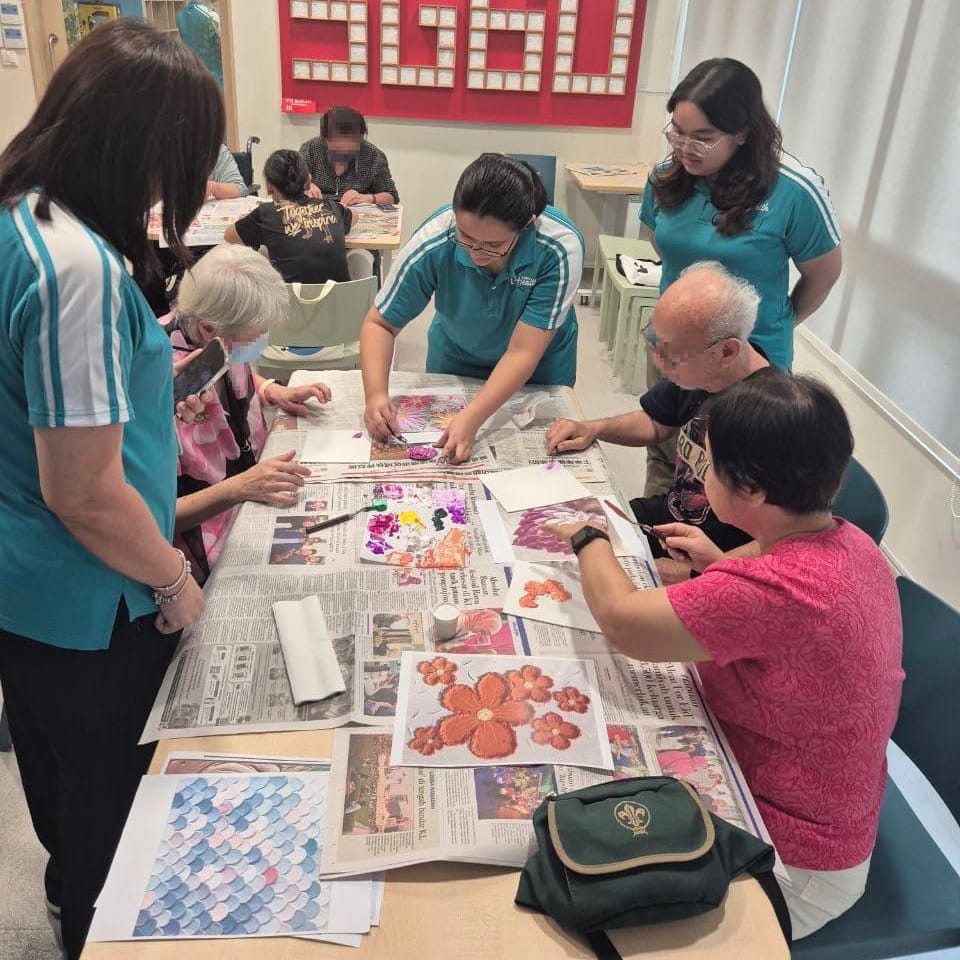
Administered by the NTU CSL Office, CSL is a mandatory Interdisciplinary Collaborative Core (ICC) course for undergraduates admitted from AY2025/26 onwards (excluding Honours College, LKCMedicine, and NIE students who take equivalent tracks). It pairs students with community organisations and school partners to complete hands-on community service alongside structured reflection.
Senior ICC specialist Mr Norman New, 48, course coordinator for the pilot run, said: “Conceptually, when we design the programme, it seems sound. But when you roll it out, as expected there are implementation challenges since many stakeholders are involved — from students to community partners.”
The pilot drew student pushback, sparking online discussion that included a Reddit thread with 83 upvotes and 52 comments.
According to Mr New, the majority of feedback from the pilot run cited concerns about location, time and the type of communities that students can serve.
For instance, some students had to travel up to two hours for service sessions that were two hours long, forcing them to make frequent long trips.
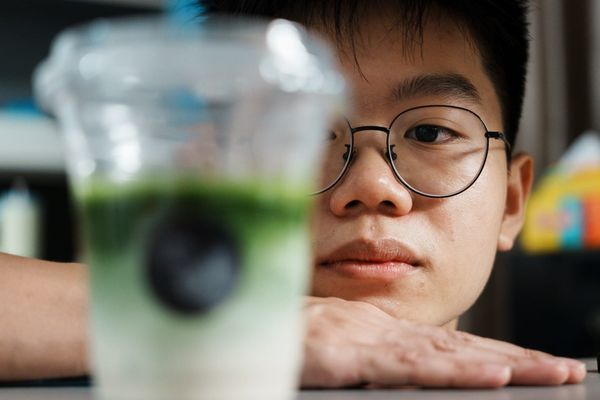
For the Silver Generation Ambassadors programme, security clearance is needed before students can start volunteering. Kieran Chan, 22, a second-year student from the School of Mechanical and Aerospace Engineering, added the module in the second week of the semester. This led to delays in the onboarding process, which meant that he only received clearance close to his final examinations.
Kieran had his first engagement in the second week of May, even though he was initially expected to clear his hours by then. He was one of the students who was granted an extension and used his summer break to clear his hours instead.
“I had to shift my plans as I wanted to complete the module as soon as possible,” he explained. To maximise efficiency, he set aside a full day each week for the engagement.
“It felt like a 9-to-5 job,” he said, as sometimes his shift would start at 10am and end as late as 7pm.
The CSL programme has since been revised to give students more flexibility.
Students will now have a year, instead of a semester, to complete their 40 hours of service, with more opportunities available in central and western Singapore to reduce travelling time. Students holding bursaries are also provided $100 in transportation allowance.
Finding relevance
Aside from practical problems encountered, concerns also surfaced regarding the practical relevance of CSL.
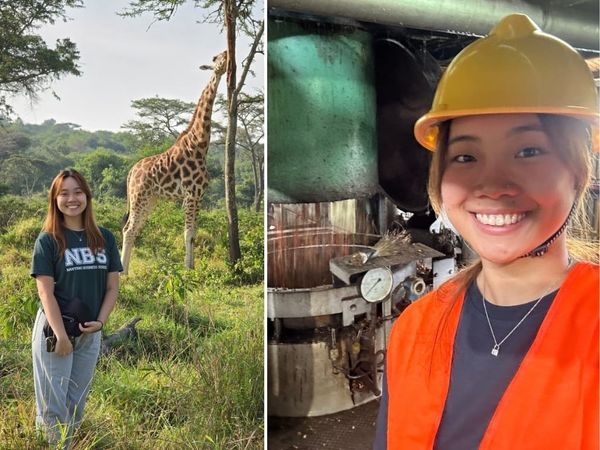
Second-year School of Electrical and Electronic Engineering student Akhmajon Tabarov, 19, was planning and carrying out activities, such as mahjong and hydroponics harvesting, for seniors at an Active Ageing Centre. He found little value in the module since eldercare was unrelated to his field of study.
“For me, as an engineering student, doing eldercare was completely ineffective,” he said, “But I understand that for a pilot run, (the lack of choices) was a necessary sacrifice.”
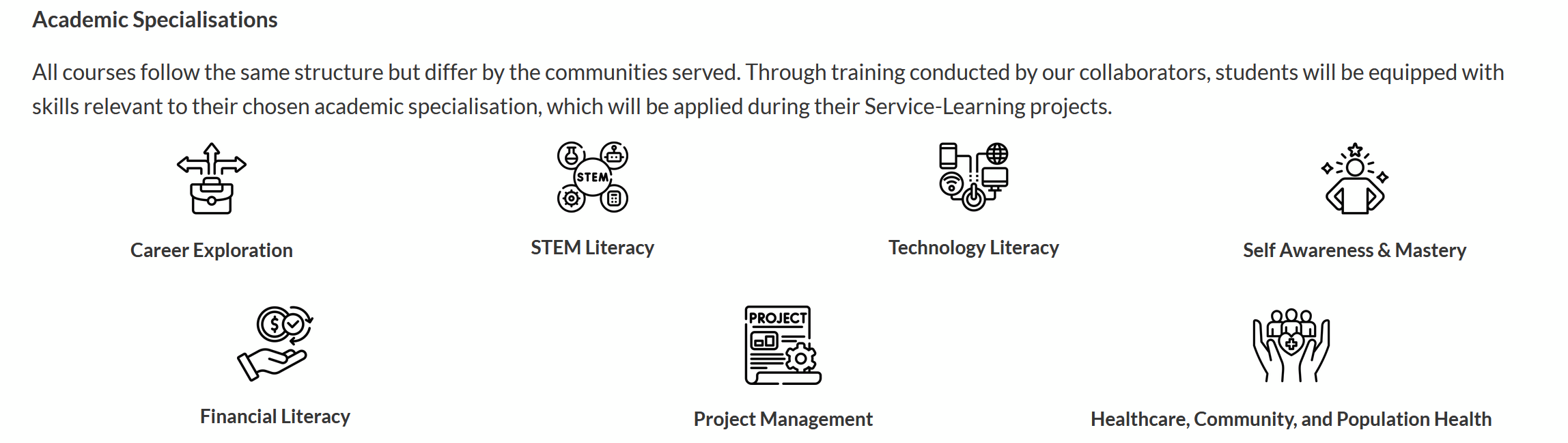
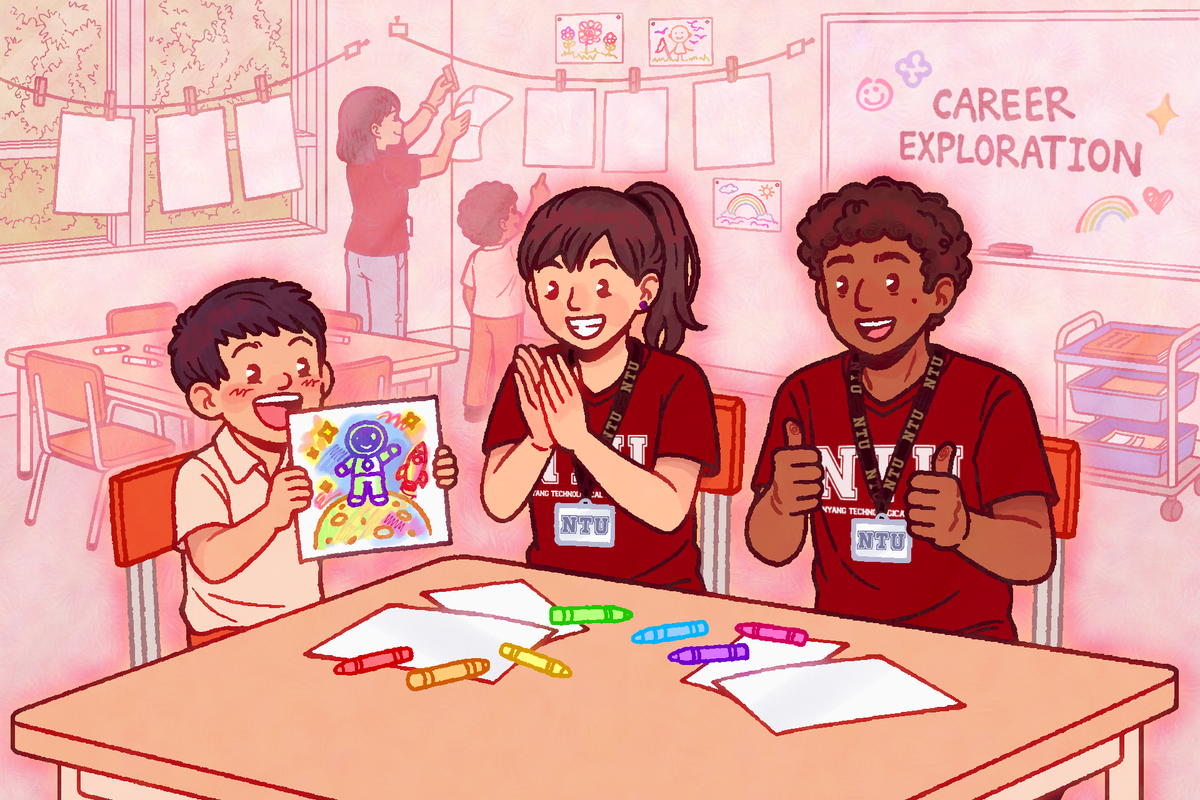
From AY2026/27, students can also choose from seven core skill domains, such as career exploration and STEM (science, technology, engineering and mathematics) literacy. This allows students to align their service projects with their academic disciplines to better bridge coursework and community service.
Skills2Serve, a new programme started this semester, ensures that each cohort undergoes specialised training before starting their community service. Based on their chosen skill track, students are assigned to a training session conducted by the relevant partner organisation.
Participating organisations include the James Dyson Foundation, which will equip students with STEM literacy, Tata Consultancy Services with technology literacy, as well as UOB with financial literacy.
The new roll-out currently covers children, youths, seniors and persons with disabilities. Three more groups — ex-offenders, migrant workers and the homeless community — will be introduced in the second semester of AY2026/27.
Not alone
Other local universities incorporated community service into their undergraduate programmes years ago — Singapore Management University (SMU) introduced its Community Service Programme in 2000, while the National University of Singapore (NUS) launched its Communities and Engagement pillar in 2021.
NUS students can choose from one of six sectors, such as arts and culture or persons with disabilities. Meanwhile, SMU students can join student-led initiatives, community service clubs, or propose projects themselves.
However, requirements vary: NTU students must clear 40 hours over a year, while NUS students can choose between a semester-long or a year-long programme, and SMU students are to fulfil 80 hours before graduation.
Technical hiccups
But the expanded rollout has brought challenges of its own.
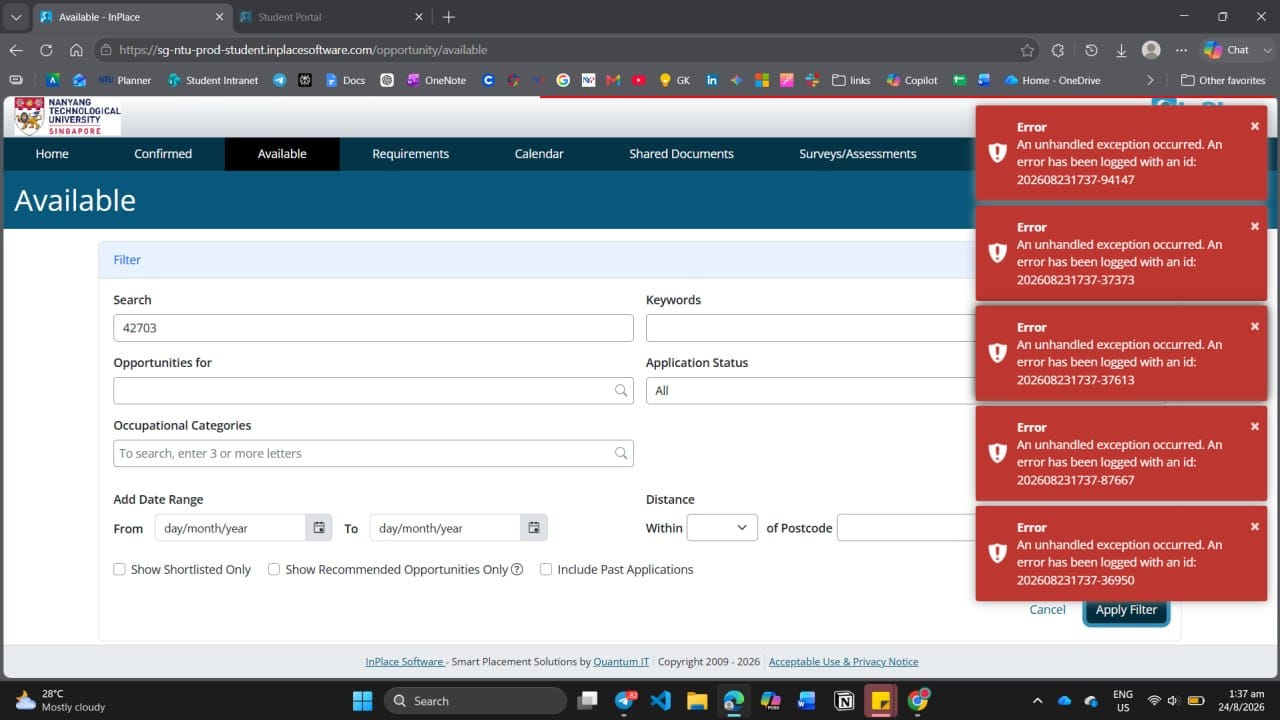
When service opportunities were made available on InPlace on Aug 24, students encountered difficulties accessing the portal to choose their preferred slots. Common issues included prolonged loading screens and login errors, leaving some unable to secure a placement of their choice.
After nearly a day, the CSL Office announced that the issues were resolved. Students were also given a short window to submit an appeal if they were unable to register for an opportunity that fits their timetable.
Second-year student Srujan Srivatsav Palakurthi, 22, from the College of Computing and Data Science, was among those affected by the technical issues.
“The portal already crashed when I logged in at 11.30pm,” he said. “At 3.30am, I was still trying to figure it out.”
Srujan subsequently submitted an appeal and managed to secure an opportunity.
In response to the Chronicle’s enquiries, the CSL office provided a statement.
“The CSL Office acknowledges that some students experienced challenges during the opportunity selection process due to system issues, which were resolved later that afternoon.
“Where students were unable to secure a suitable opportunity due to these system issues and/or timetable clashes, the Office worked with our community partners to source additional opportunities and reviewed each student’s appeal based on their indicated availability.
“The appeal window was set to allow the Office sufficient time to review each appeal individually, while concurrently working with community partners to source and match students to additional opportunities based on their availability.
“Throughout the process, the Office coordinated closely with multiple stakeholders, with our priority remaining to support students in securing suitable opportunities and beginning their community engagement as soon as possible.”
Beyond the hours
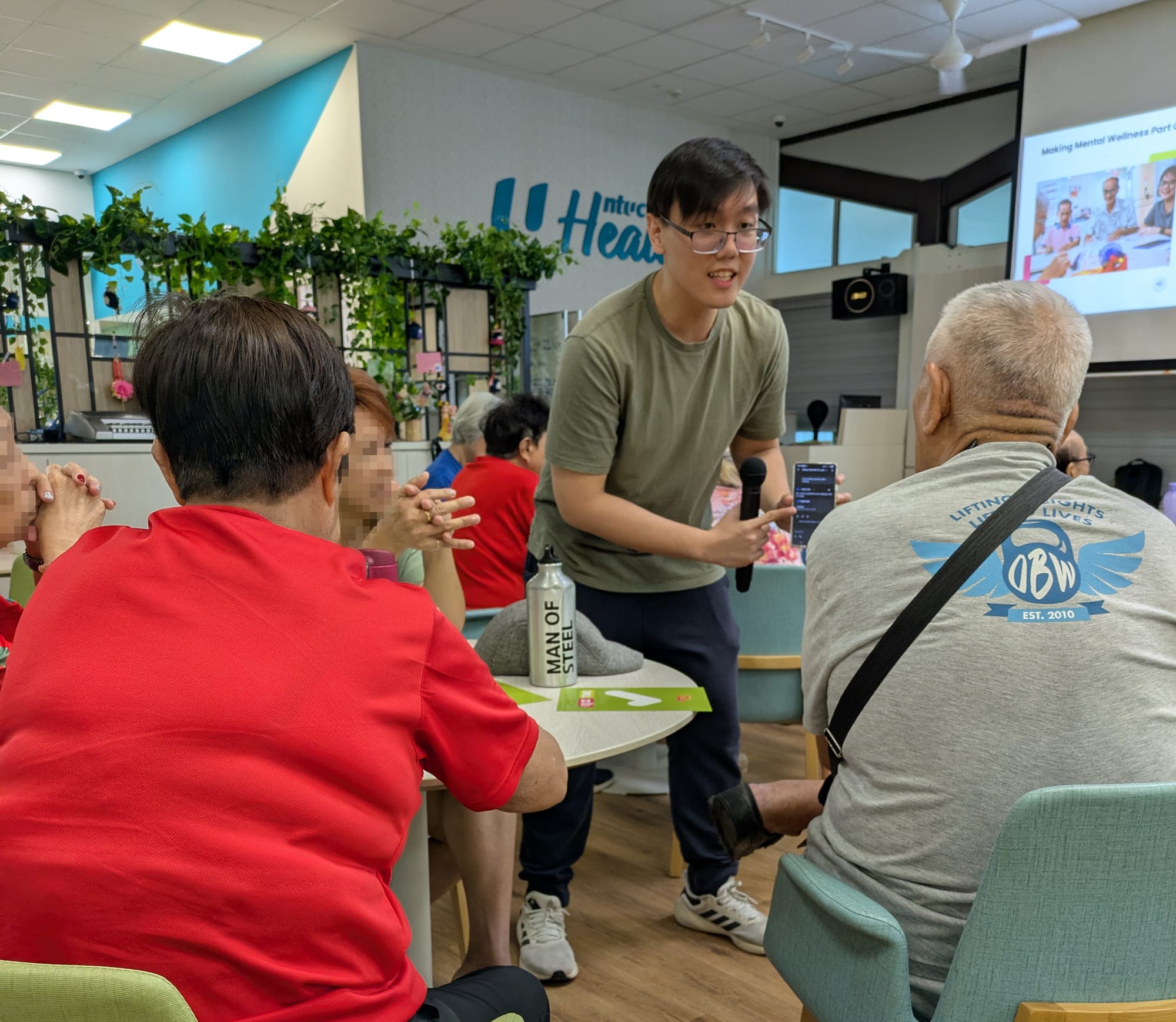
Despite the uncertainty and challenges of this new implementation, some students have walked away with new perspectives and valuable relationships.
Second-year student Julian Leow, 21, from the School of Mechanical and Aerospace Engineering, grew close enough to the seniors he served that they gave him home-baked goods and invited him to celebrate Chinese New Year together.
“The seniors inadvertently became my local food guides,” he said. “They would share their favourite food orders and the best spots to get them, such as this tong sui (a Cantonese dessert) spot in Jurong Central Plaza that I still frequent from time to time.”