NTU joint team with UAE tech firm clinches gold at international autonomous racing event
A team from NTU’s AutoMan Lab, in collaboration with United Arab Emirates-based technology firm K2, placed first in the 2026 Abu Dhabi Autonomous Racing League's Imola race.
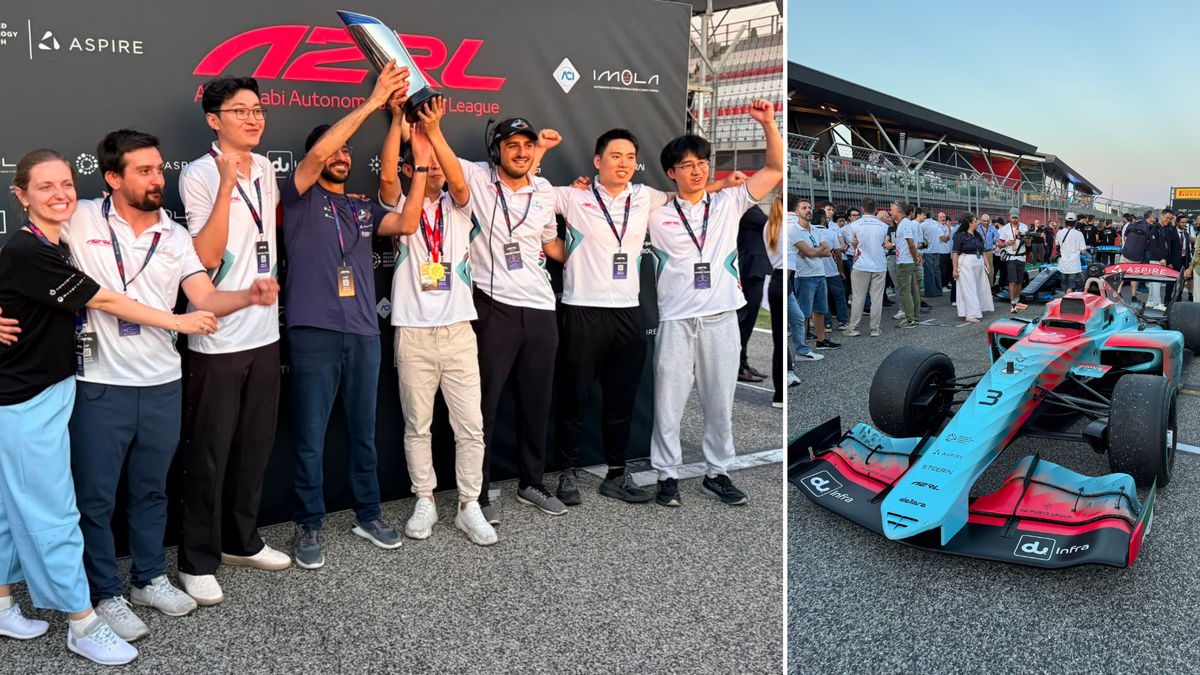
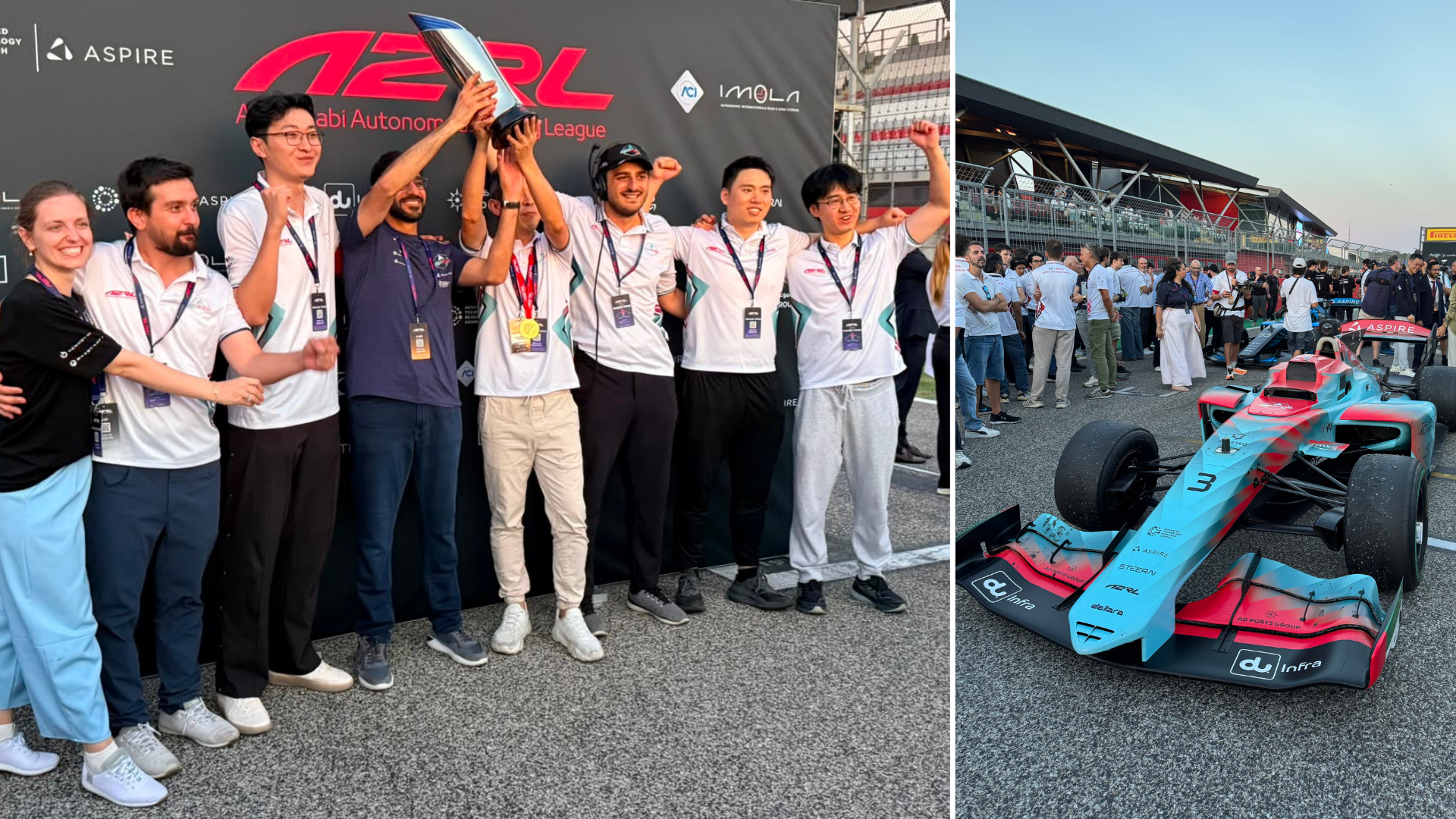
SINGAPORE — A team from NTU’s AutoMan Lab, in collaboration with United Arab Emirates (UAE)-based technology firm K2, and autonomous systems specialist Alp Autonomy, placed first at the Automobile Club d'Italia Racing Weekend at Italy's Imola Circuit on Sept 5.
Out of the five teams competing in this year's A2RL, UAE-based Team Kinetiz, was the only one to feature students from Singapore's NTU as part of its collaborative team.
The A2RL is the world’s fastest and largest autonomous racing league, and this event is the first A2RL race to take place outside of Abu Dhabi. All five cars that competed in the Imola finals raced with the same model — the Emirates Autonomous Vehicle 2025, or EAV-25.
The model is fitted with seven cameras, three lidar units, and four imaging radars that collectively act as the car’s eyes, showing it the track ahead and the cars around it. Motion sensors feel how hard the car is accelerating and turning, while satellite navigation tells it where it is on the circuit. Everything it “sees” goes to a hard drive built to survive intense shaking, and 5G antennas send that data back to the engineers.
“Winning at Imola is a fantastic recognition of all the hard work and technical progress we have made throughout the past three years,” said principal investigator for the A2RL Research Collaboration, Associate Professor Lyu Chen, 38, who also founded the AutoMan Lab.
Road to champions
Kinetiz has been at the circuit since July, with all teams given nine days of on-track testing before the race.
Throughout, Kinetiz collected data at the circuit and sent it back to Singapore daily for local analysis.
Back at the AutoMan Lab, the team’s analysts and strategists carried out simulations and data perception for the on-the-ground team in Italy to make changes. Perception and localisation analyses are essential to decide on racing strategies through the process of interpreting data.
Research associate and autonomous driving engineer He Xianqi, 27, gave examples of strategic questions the team had to consider: “Should we go from the left or from the right to overtake? Should we even overtake here, or should we yield here? And when others overtake us from the back, should we defend or let them go?”
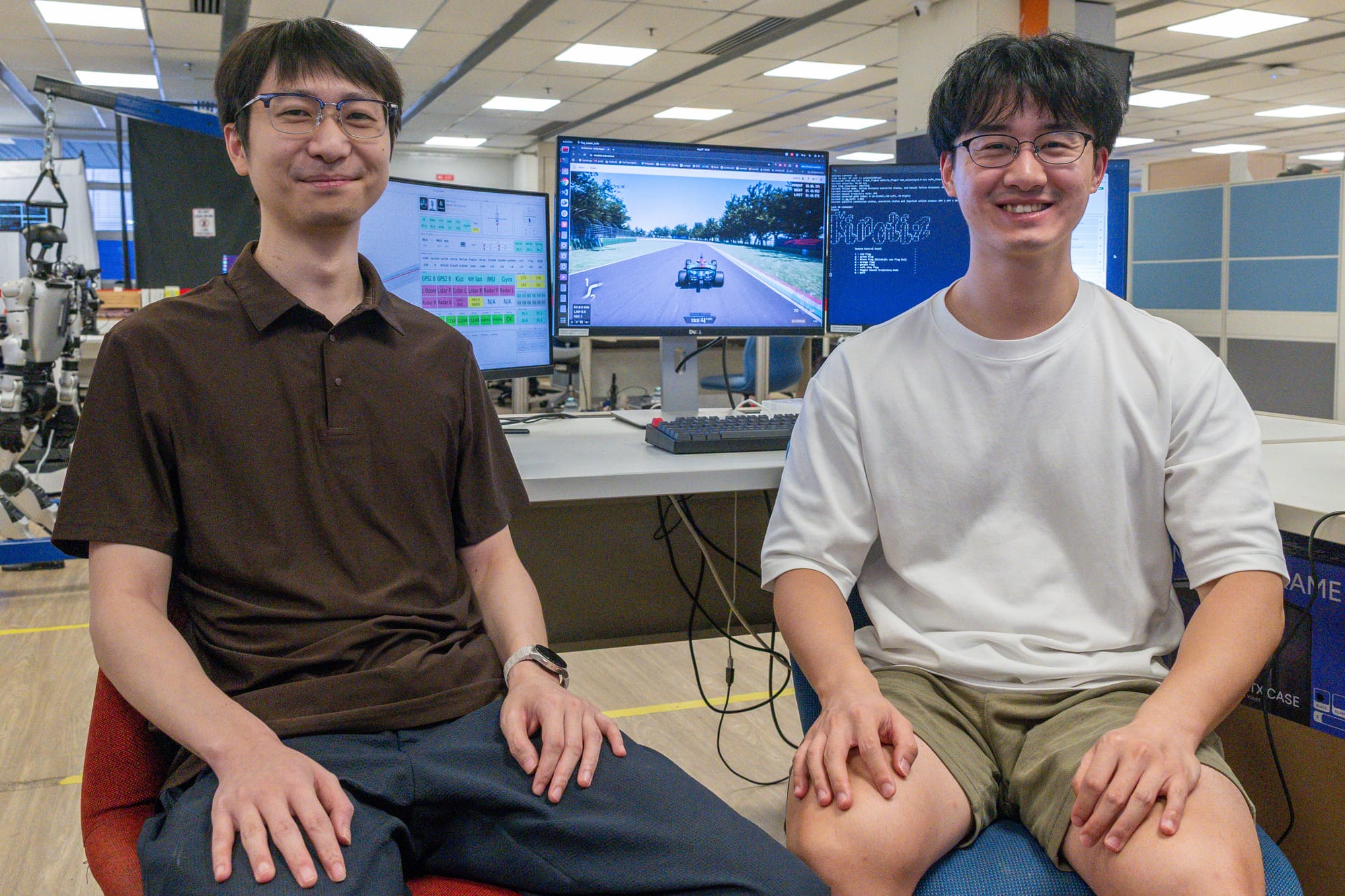
Before the on-track testing period, Kinetiz had monthly reviews in NTU, where they showcased progress made through simulating races.
“For our team, we started from scratch,” said Prof Lyu. “They are all students; we have done a lot of driving projects, but normal driving is way different from racing.”
“Of course, placing fourth in (the qualifier) was not the result we had hoped for,” said Prof Lyu. “But we also knew that qualifying is only one part of the race weekend.”
In the following days, the team redesigned parts of the system to make remote connections more reliable, strengthened its safety mechanisms, and drew up contingency plans for a range of failure scenarios.
Prof Lyu said that the team’s final result showed their resilience and ability to perform under pressure.
Kinetiz races next at the Yas Marina Circuit in Abu Dhabi in October, the A2RL’s closing round.
The future of autonomous robotics
The AutoMan Lab operates out of the Robotics Research Centre based in the School of Mechanical Aerospace and Engineering (MAE), with students from MAE, the School of Civil and Environmental Engineering, and the School of Electrical and Electronic Engineering as participants. The lab is Singapore's first interdisciplinary research centre for robotics.
One of its most recent projects made its debut at NTU’s convocation ceremony. On Aug 1, a humanoid robot named Iris opened the ceremony, waving to the audience and delivering opening remarks.
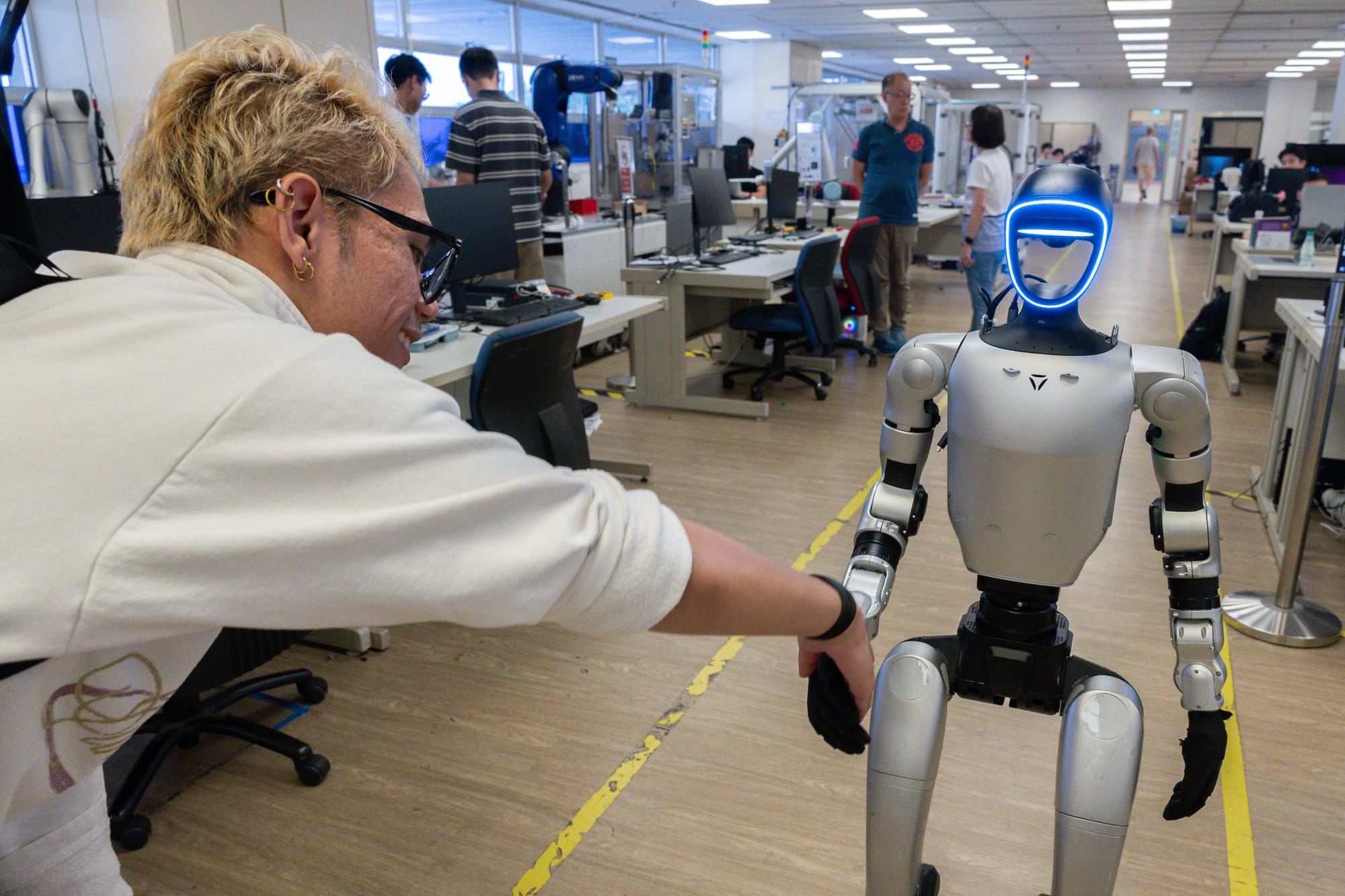
Another team in the lab is working with Aumovio, an automotive electronics firm, said Zhang Haoruo, 27, a PhD student at the lab. They are working to find out what makes something dangerous while driving, using cameras pointed at the traffic outside and cameras that track where the driver’s eyes go. The testing is done on a mock-up driving set-up in the lab, with a real test car on the way.
“Our long-term goal is to develop robots and autonomous systems that can operate safely and intelligently in complex real-world environments, and eventually become more deeply integrated into human society and everyday life,” said Prof Lyu.
Their efforts sit within a broader surge of interest in autonomous robotics. At the second World Humanoid Games in Beijing this August, humanoid robots repeatedly outperformed human benchmarks. Tiangong Ultra ran 100 metres in 8.64 seconds, beating Usain Bolt’s 9.58s world record. It also broke the men’s 400m world record.
“The entire community now is very, very competitive. They are moving super fast,” said Prof Lyu.